Warm vs cold outreach on LinkedIn
The difference between cold, warm and signal-led outreach on LinkedIn, when each one works, and a one-week warm-up that turns a stranger into a familiar name.
The short answer
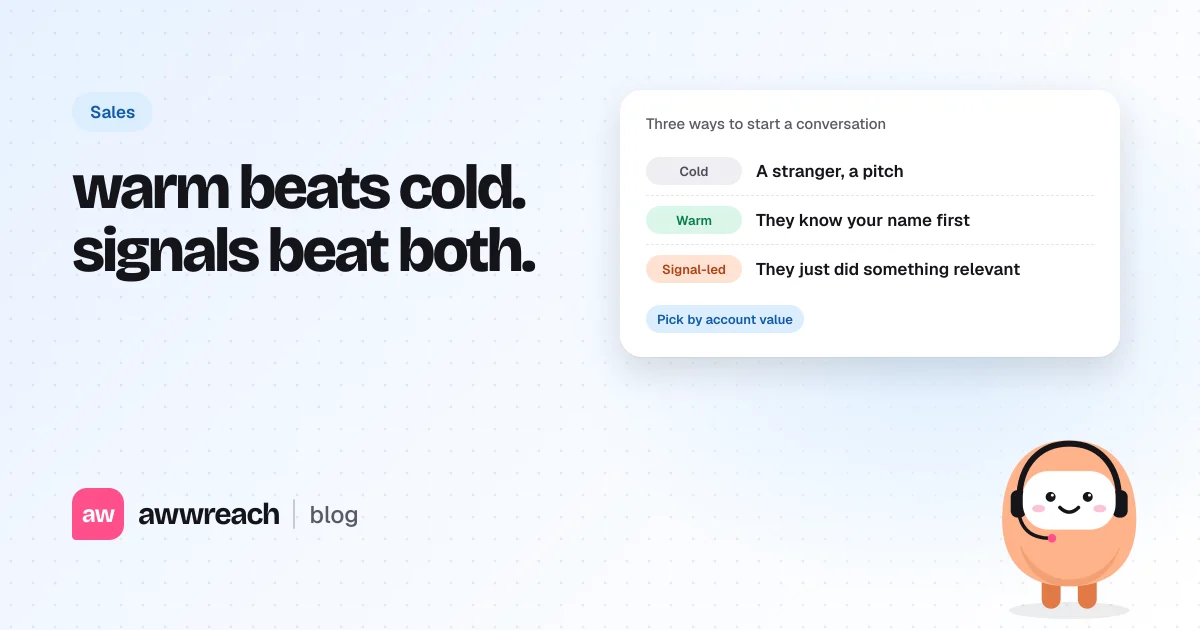
Cold outreach is a first message to someone who has never seen your name. Warm outreach comes after you've visited their profile, followed them and engaged with their posts, so they recognise you. Signal-led outreach is triggered by something they just did, like posting about your problem or starting a new role. Use warm by default, signals for your most valuable accounts, and cold only for quick tests.
On this page
#What's the difference between warm and cold outreach?
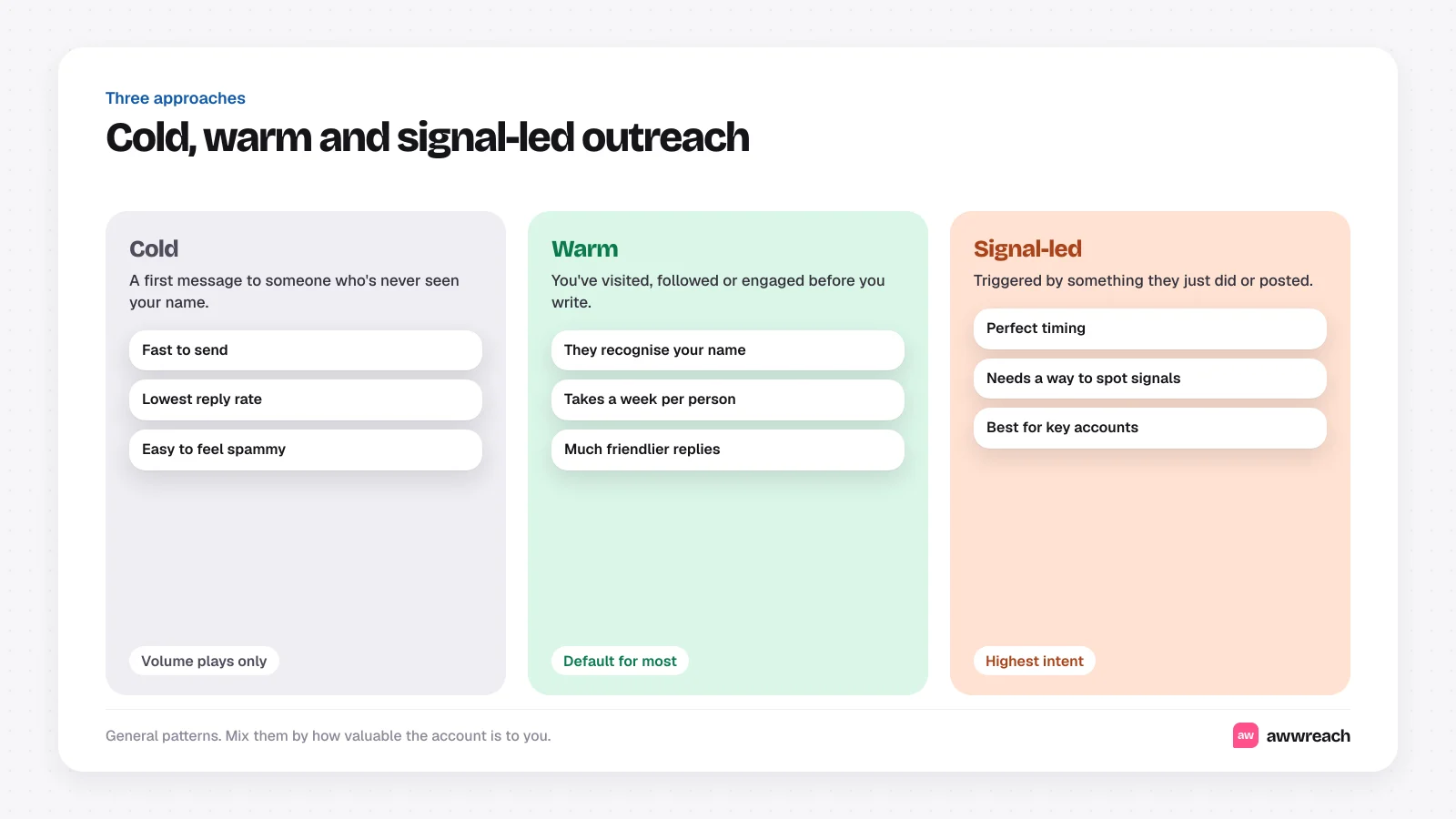
The difference is what the person knows about you when your message arrives. With cold outreach, nothing. With warm outreach, they've seen your name in their notifications, under their posts and in their feed. With signal-led outreach, you're writing about something they just did, so the message has an obvious reason to exist.
#Does cold outreach on LinkedIn still work?
Sometimes, for simple offers and short lists of people who clearly need what you sell. It's also the quickest way to test a new message. The trade-off is that cold notes from strangers are easy to ignore and, sent at volume, they're what makes LinkedIn inboxes feel like spam. Use cold for tests, not as your whole motion.
#How do you warm up a prospect on LinkedIn?
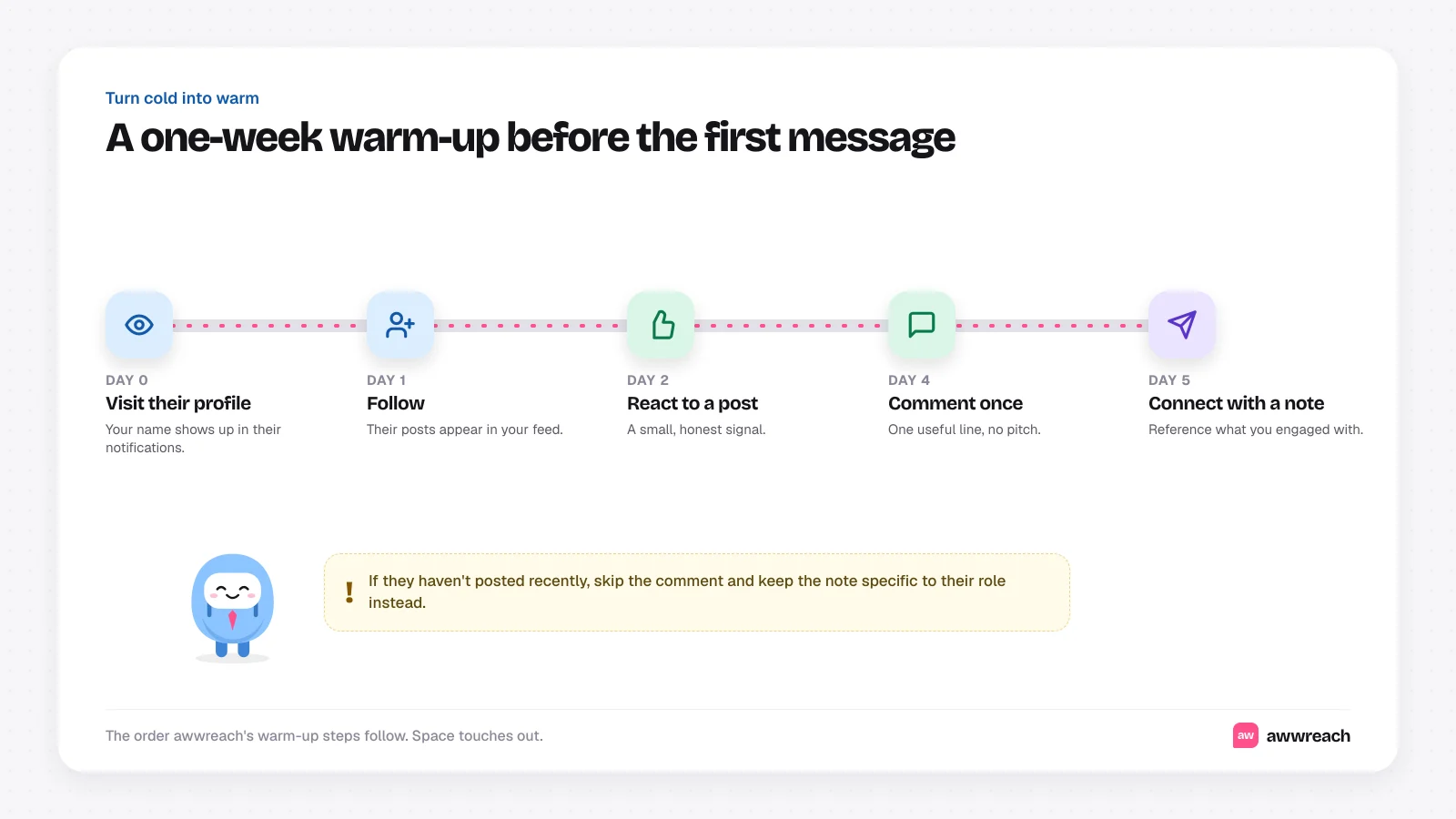
- Day 0: visit their profile. Your name shows up in their "who viewed your profile" list.
- Day 1: follow them, so their posts appear in your feed.
- Day 2: react to a recent post.
- Day 4: leave one useful comment, if they've posted something worth replying to.
- Day 5: send a connection request with a note that references what you engaged with.
#What makes outreach signal-led?
A signal is a recent, specific reason to reach out: they posted about the problem you solve, they started a new role, their company is hiring for a team you sell to, or they commented on a competitor's post. Signal-led outreach references it in the first line, so the message feels like a reply rather than an interruption.
For the full approach, see signal-based LinkedIn for solo sellers and how to prospect from LinkedIn post engagement.
#Which should you use?
| Situation | Approach | Why |
|---|---|---|
| Testing a new offer or message | Cold, small batch | Fast feedback before you invest time |
| Your core target accounts | Warm | Recognition lifts replies and keeps your reputation intact |
| Someone just posted about your problem | Signal-led | The timing will never be better |
| A must-win account | Signal-led and warm | Warm up several people, open with the signal |
#Running warm and signal-led outreach without the busywork
Warming up 30 people by hand is a lot of tabs. awwreach runs the warm-up steps for each person in a flow, spaced out over the week, and drafts a note that references what you engaged with. Latest signal adds people who posted about your topic in the last 24 hours, so signal-led outreach starts every morning without searching.
#Earn recognition before you ask for attention
Cold outreach asks a stranger for time. Warm outreach asks someone who already knows your name. Signal-led outreach asks at the moment it's most relevant. Spend a week warming up the people who matter, open with what they just did, and keep cold for quick experiments.
Frequently asked questions
Cold outreach is a first message to someone who has never seen your name. Warm outreach comes after you've engaged with them, so they recognise you when your message arrives.