Signal-based LinkedIn selling for solo sellers
How one seller can run signal-based outreach on LinkedIn without a data team: three signals worth acting on, a weekly routine, notes that name the signal, and when to stop.
The short answer
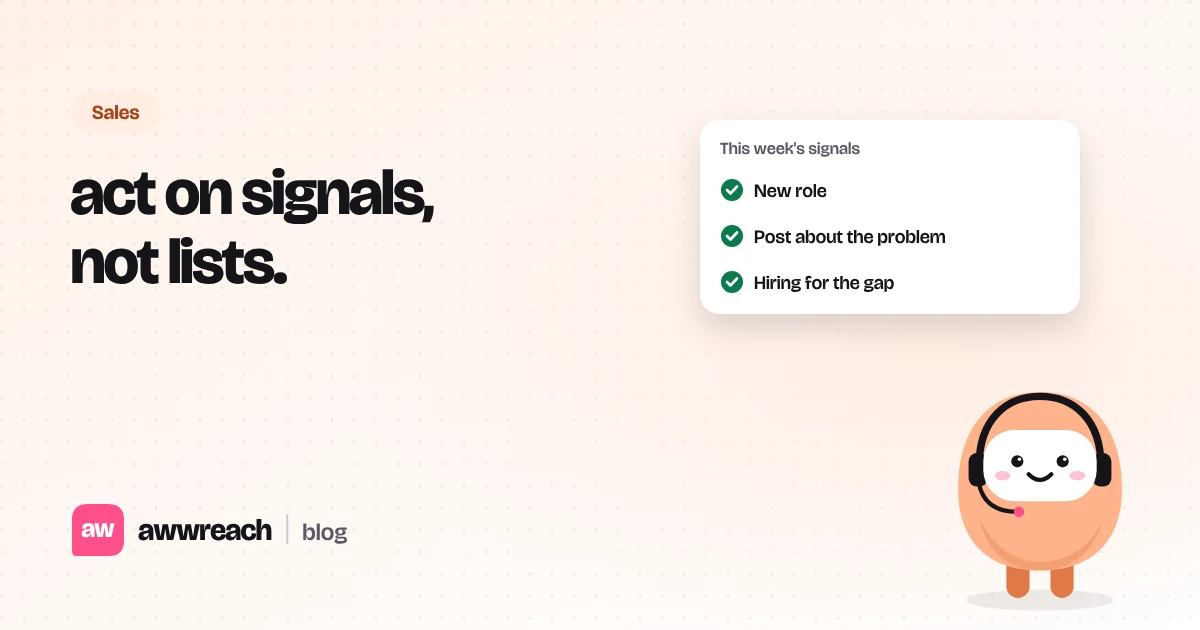
Signal-based selling just means reaching out because something changed, not because someone fits a list. A solo seller needs three signals: a new role, a post about the problem you solve, and a hiring post that hints at the same need. Each week, act on a handful of these. Warm the person up with a visit and a genuine comment, then connect with a note that names the signal. If you can't name a signal, don't send.
#Three signals worth acting on
| Signal | Where you see it | Why it matters | What to say |
|---|---|---|---|
| New role | Profile or job-change notification | New leaders review tools in their first 90 days | Congrats, plus one question about the new remit |
| Post about your problem | Their feed or a comment thread | They've told you it's on their mind | Add something useful to their point |
| Relevant hiring post | Company page or jobs tab | Hiring for a role often signals a gap or growth | Ask how they're handling it while they hire |
Event attendance, a funding announcement or a competitor change can work too, but start with these three. They're easy to verify and easy to reference honestly.
#A weekly routine
- Monday: collect five signals
Only people you'd be happy to explain to a colleague in one sentence.
- Write the signal down
In a note or a custom column. If you can't write it, they don't go in the flow.
- Warm up
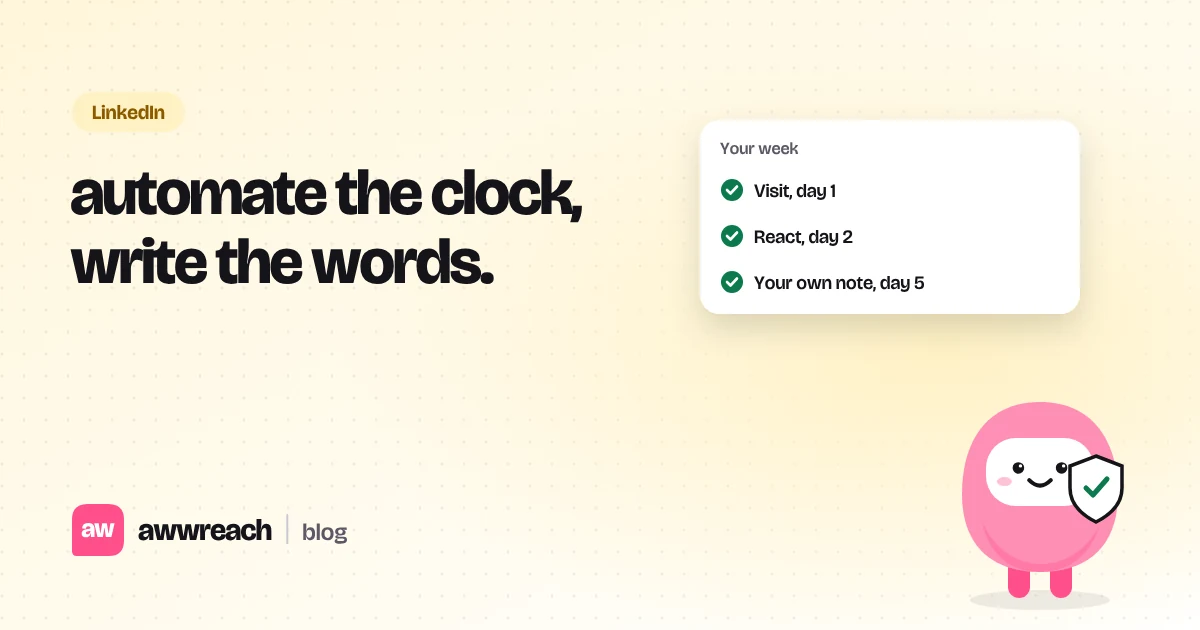
Visit, follow and react over a couple of days.
- Comment if there's a real post
One factual line that adds to their point. No praise for the sake of it.
- Connect, naming the signal
Under 300 characters. One soft ask: a reply, or 15 minutes.
- One follow-up, then archive
Four or five days after they accept. If it's quiet after that, stop.
Hi Ryan, congrats on the move to Head of RevOps at Northwind. Your post on marketing-to-sales handoff was spot on; that's the gap we work on. Open to connecting?
#When multithreading makes sense
Large teams reach several people at one account at once. As a solo seller, start with one person per account. Add a second only if the first replies and points you to someone, which is a warm intro rather than a cold second thread.
Frequently asked questions
No. Job changes, posts and hiring signals are all visible on free LinkedIn. Navigator just makes filtering faster.