How to prospect from LinkedIn post engagement
Use people who write and comment on LinkedIn posts about your problem as prospects: who to pick, how to reference what they said and what to avoid.
The short answer
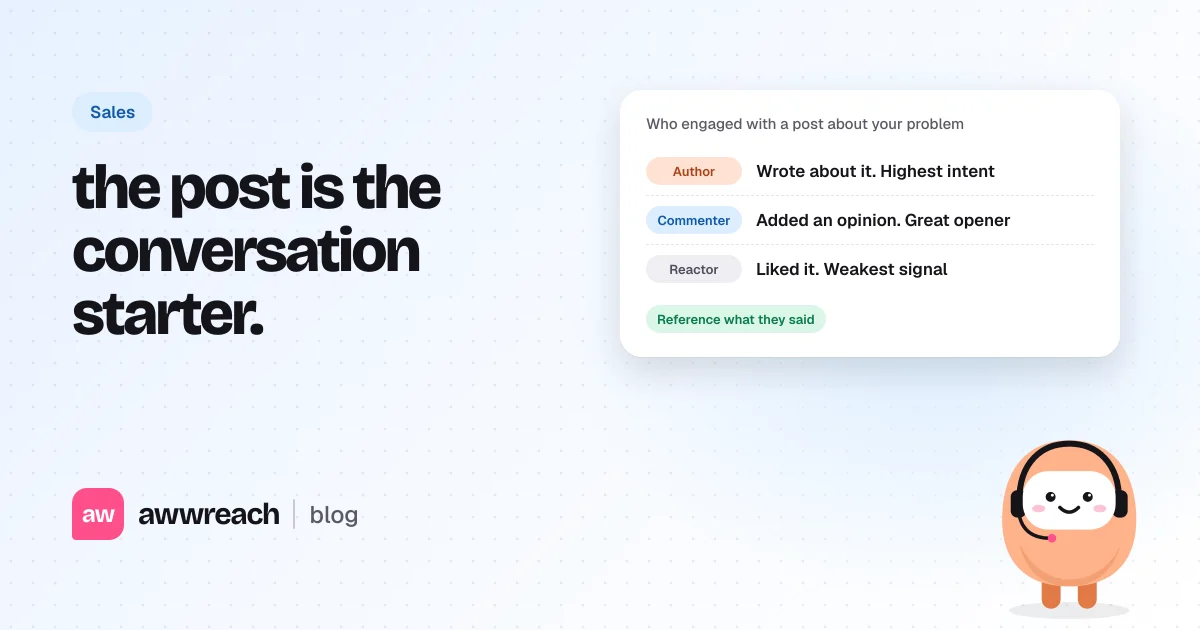
People who write or comment on posts about the problem you solve are telling you it matters to them right now. Prioritise authors, then commenters, then reactors, and check each person's role fits before you write. Warm them up, then send a note that quotes what they said, adds a point of view and asks one question. Never open with "I saw you liked a post".
On this page
#Why prospect from post engagement?
Timing. Someone who wrote or commented on a post about pipeline reporting this week is thinking about pipeline reporting this week. That's a better reason to reach out than a title match from a list built months ago, and it gives your first message something specific to say.
#Who should you prioritise?
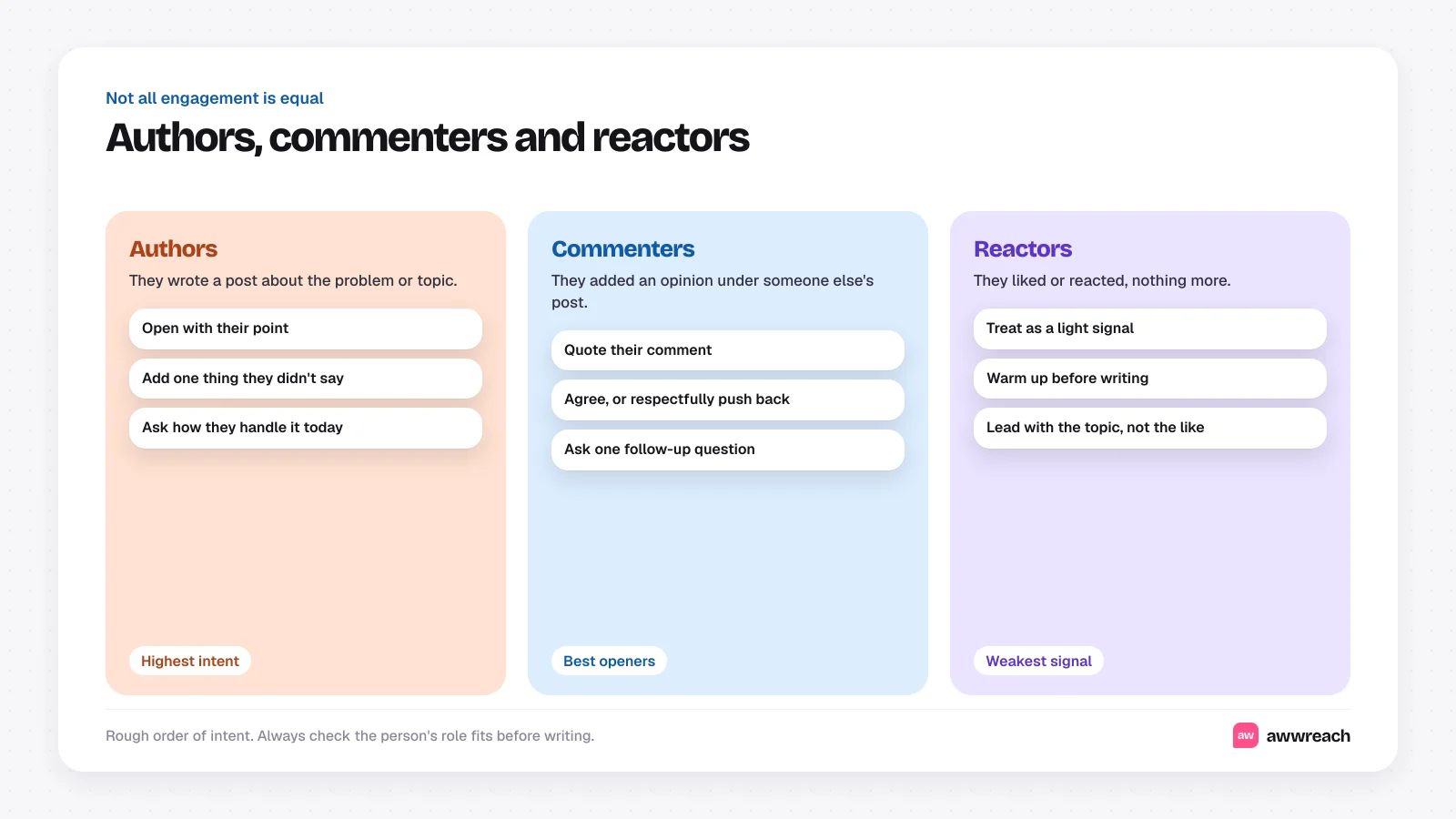
- Authors wrote about the problem. They have the strongest opinion and usually the most context.
- Commenters added a view under someone else's post. Their comment gives you a ready-made opener.
- Reactors clicked like. Treat it as a light signal and warm them up before writing.
#How do you find posts worth mining?
- Search the problem, not your product
Use the phrases buyers use. "Pipeline reports nobody trusts" finds more buyers than your category name.
- Sort by latest
Engagement from the last day or two is the freshest signal.
- Look at industry voices' posts
Analysts and well-known operators in your space attract comments from exactly the people you sell to.
- Save the comment
Keep a note of what each person said. It's your first line.
In awwreach, Latest signal reads up to 100 posts a day from the last 24 hours that mention your topic and adds the authors who fit your buyer, with a fit score. Find people also searches public posts on a topic and keeps their authors and commenters as candidates, each with the reason they were picked.
#What should the message say?
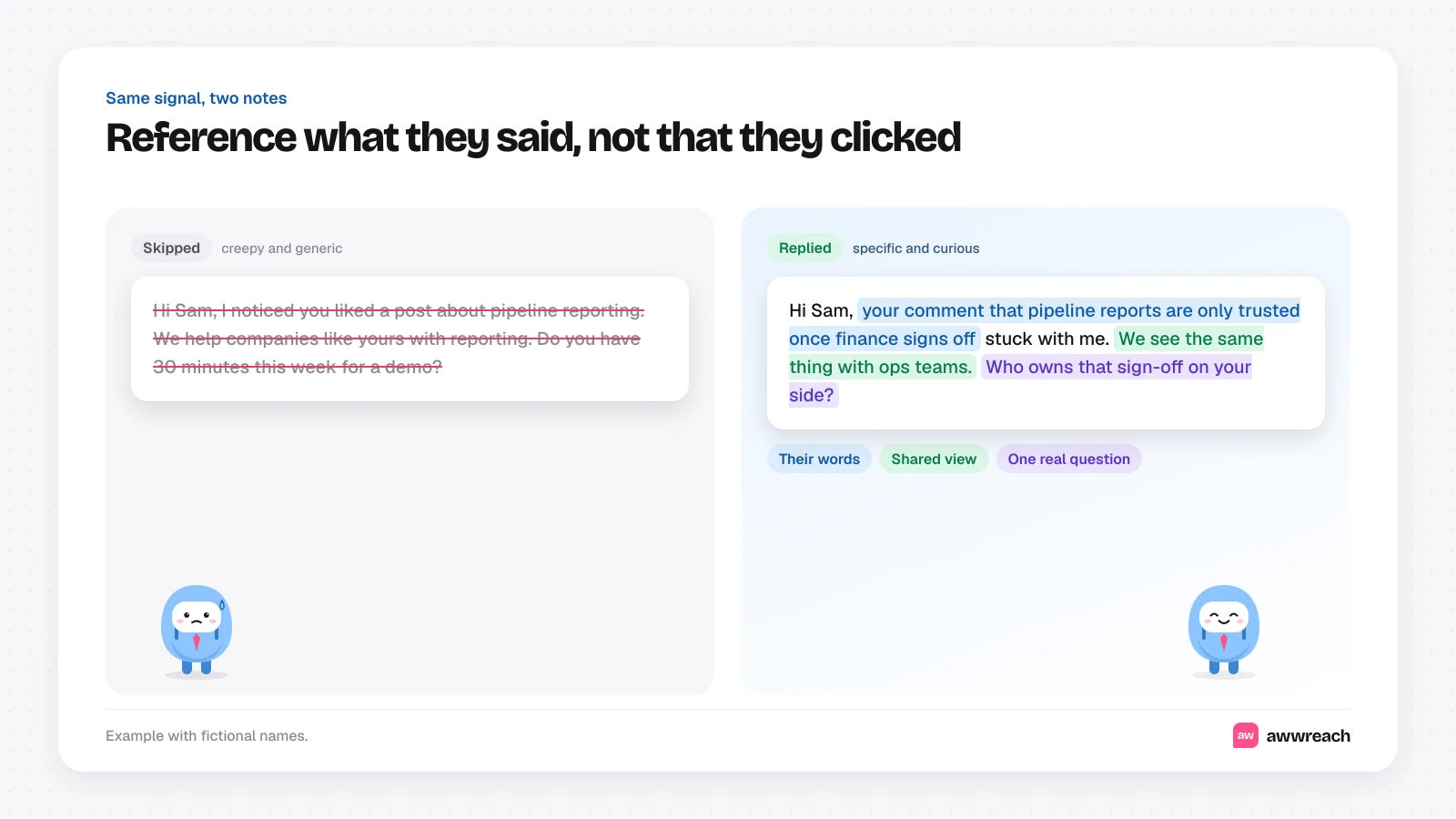
Three parts work well: their words, your view, one question. These are examples, not real messages.
Hi Sam, your comment that pipeline reports are only trusted once finance signs off stuck with me. We see the same with ops teams. Who owns that sign-off on your side?
Hi Priya, liked your post on routing inbound leads by territory. The part about reps cherry-picking accounts is something we hear a lot. Did fixing the routing rules solve it, or was it more of a comp plan issue?
#What should you avoid?
- "I saw you liked a post about…" Nobody wants to know they're being watched.
- Pitching in the first message. Earn a reply first.
- Copying the same opener to everyone who commented. They often know each other.
- Messaging within minutes of the post. Warm up over a few days so it doesn't feel like a trap.
Warming up first makes a big difference. See warm vs cold outreach on LinkedIn for a one-week warm-up, and signal-based LinkedIn for solo sellers for building a whole routine around signals.
#Let the post start the conversation
Every post about your problem is a list of people telling you it matters. Pick the ones whose role fits, warm them up, and open with what they said. The conversation that follows is about their problem, which is where good sales conversations start.
Frequently asked questions
Find recent posts about the problem you solve, keep authors and commenters whose role fits your buyer, warm them up, then message them quoting what they said.