How to become a GTM engineer: a 90-day plan
A practical 90-day plan to become a GTM engineer: the skills to learn, three portfolio plays to build, what the role pays, where to find jobs and how to prepare for interviews.
The short answer
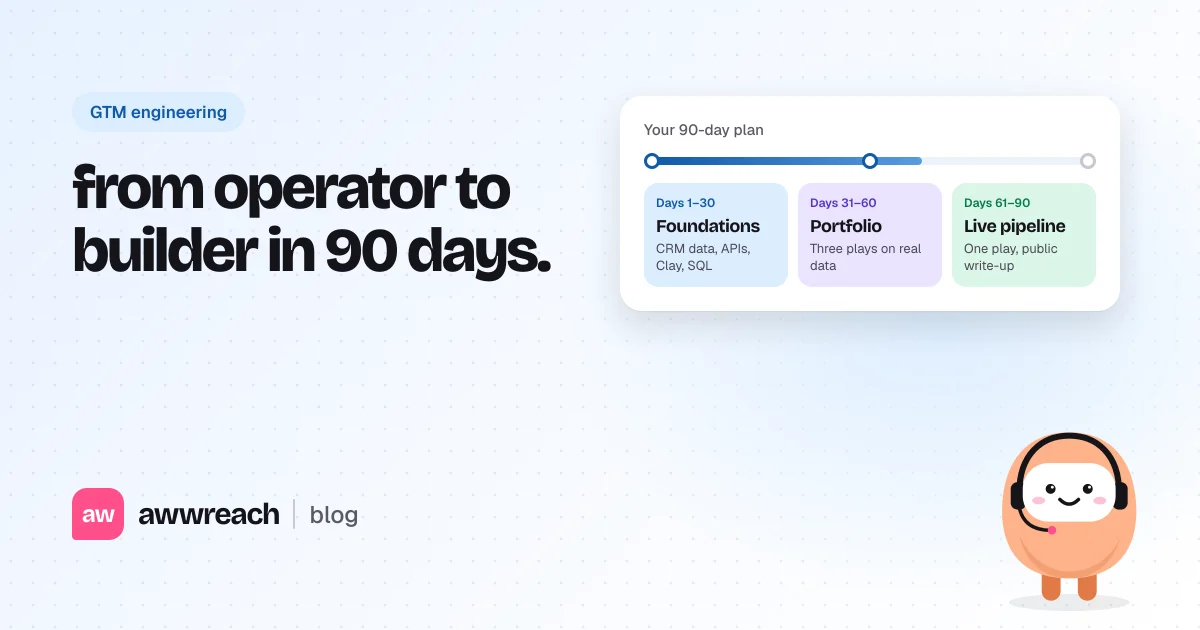
Most GTM engineers come from SDR, RevOps, growth or data roles, and over half in the 2026 industry survey are self-taught. The path that works: spend 30 days on foundations (CRM data, APIs, Clay or a similar tool, basic SQL and Python), 30 days building three portfolio plays on real data, and 30 days running one play against live pipeline and writing it up. Median US pay is $132K, about $45K higher for people who code.
On this page
#Who makes the switch
There's no degree for this. People arrive from four directions, and each starts with a different gap to close.
| Coming from | You already have | Close this gap |
|---|---|---|
| SDR or AE | Buyer instinct, copy, objection handling | Data, APIs and building workflows |
| RevOps | CRM data model, process, reporting | Outbound copy and signal design |
| Growth or marketing ops | Automation tools, testing habits | Sales process and one-to-one outreach |
| Data or software | SQL, code, pipelines | How buyers decide and what makes a message land |
The State of GTM Engineering 2026 survey found 53% of respondents are self-taught, per GTME Pulse's summary. You can teach yourself this too. The trick is building proof as you learn.
#The 90-day plan
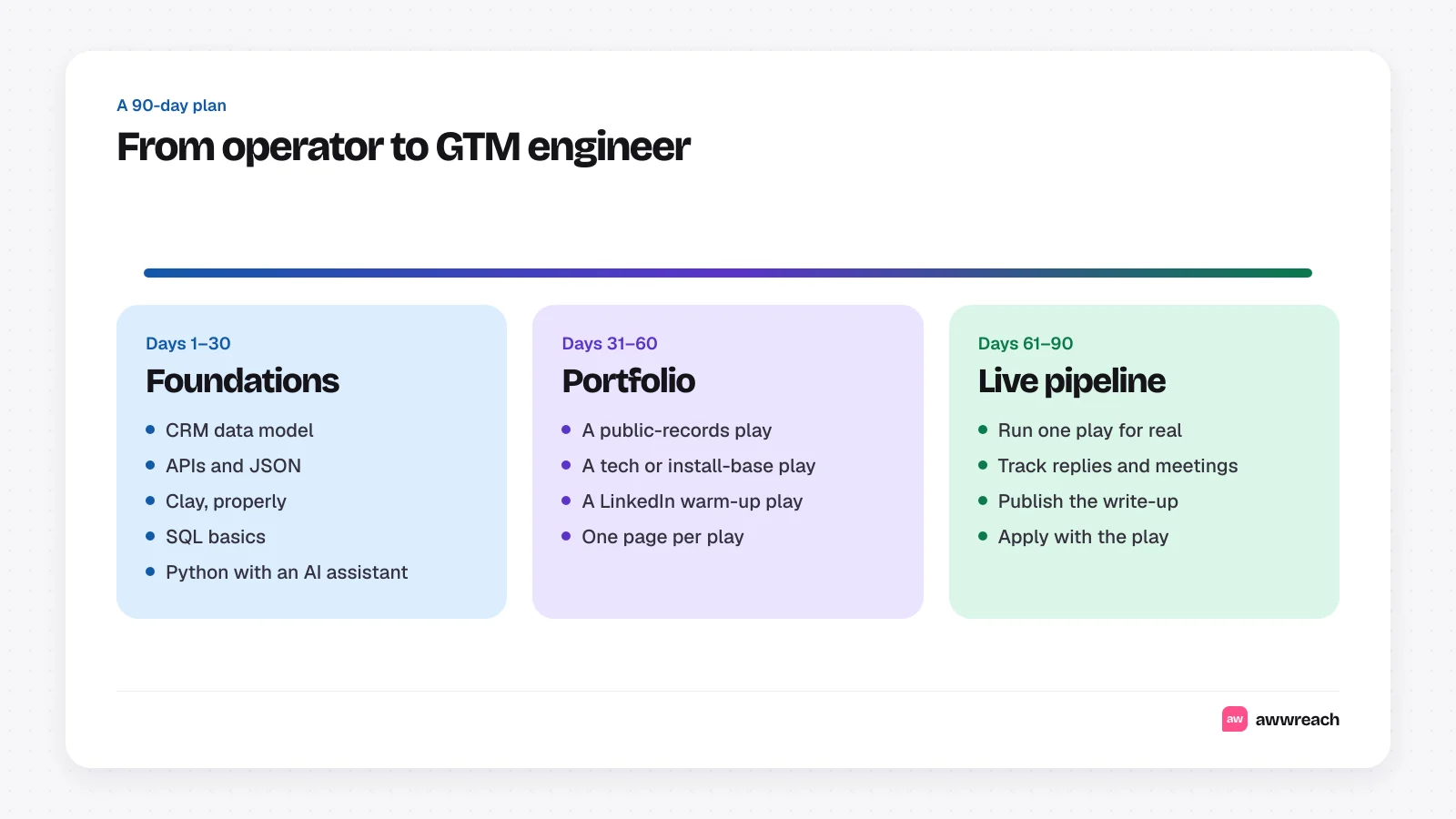
#Days 1 to 30: foundations
- CRM data model. Learn how accounts, contacts, deals and activities relate in HubSpot or Salesforce. Both have free developer or trial accounts.
- APIs and JSON. Call two public APIs, read the response, handle a rate limit. Postman or a short Python script is enough.
- One data tool, properly. Clay is the most common, and Clay University is free. Build an enrichment waterfall and an AI research column.
- SQL basics. Select, join, group by. Enough to pull a segment from a warehouse table.
- Python with an AI assistant. Write a script that takes a CSV, calls an API and writes results back. Let the assistant help, but make sure you understand every line.
#Days 31 to 60: three portfolio plays
Build three complete plays, each with a signal, a segment, a proof asset and send rules. Use real public data. The Blueprint GTM showcase has nearly 500 published playbooks if you need ideas. Aim for range:
- A public-records play
Use a government or regulator dataset with dates in it, like inspections, filings or license renewals. Show how you'd turn a record into a reason to reach out.
- A tech or install-base play
Find companies running a tool your imaginary product integrates with. Show the detection method and the message.
- A LinkedIn warm-up play
Pick a signal like a new leader in a role. Design the warm-up, the connection note that names the signal and the follow-up. Show how replies route to the CRM.
For each, write one page: the signal query, 10 sample accounts, the proof asset for two of them, and what you'd measure. That page is your portfolio.
#Days 61 to 90: live pipeline
Run one play for real. If you're employed, offer it to your sales team. If not, offer it free to a founder for a month. Track accounts found, replies, positive replies and meetings. Then write it up publicly, numbers included. Hiring managers read that more closely than any certificate.
#What GTM engineers earn
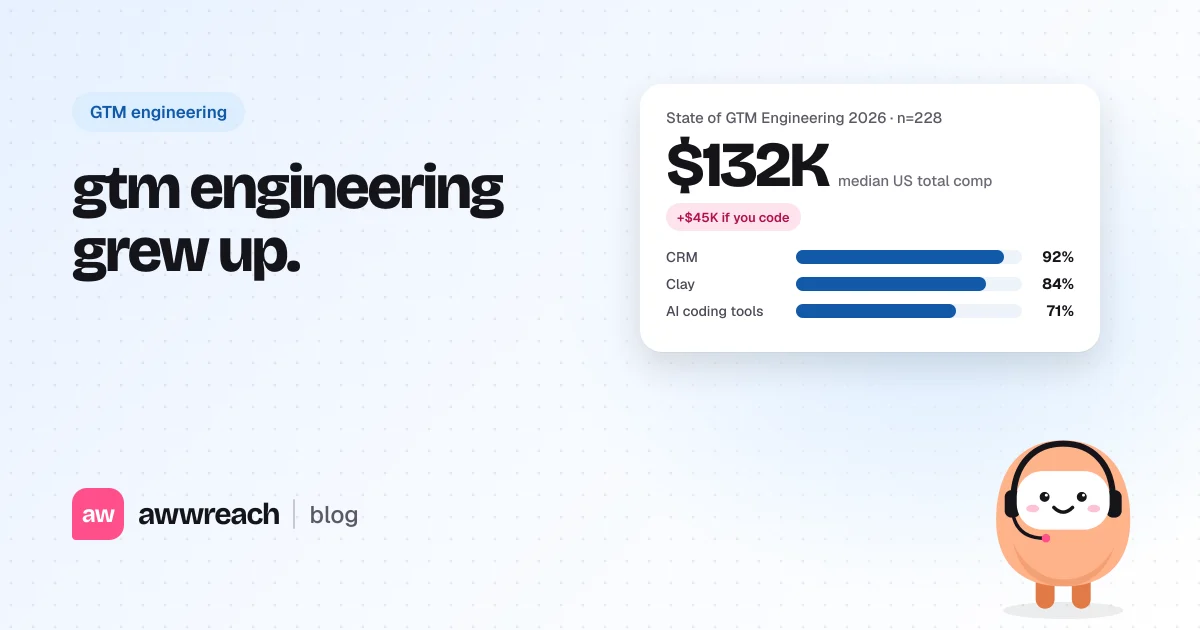
The State of GTM Engineering 2026 report puts median US total compensation at $132K across 228 respondents. GTME Pulse's breakdown reports a spread from about $85K at the 25th percentile to $250K+ at the top, and a gap of about $45K between people who code and those who don't.
#Courses and certification
Courses help with structure but don't replace building. A sensible order: free tool training first (Clay University, the n8n docs, your CRM's developer courses), then a paid cohort only if you need accountability. Treat any GTM engineer course or certification as a bonus line on your CV. The portfolio and the live write-up are what get you hired.
#Finding GTM engineer jobs
- Search job boards for “GTM engineer”, “go-to-market engineer”, “growth engineer” and “RevOps engineer”. The same role hides under all four.
- Look at companies whose sales team is small relative to revenue. They're usually the ones building systems instead of hiring reps.
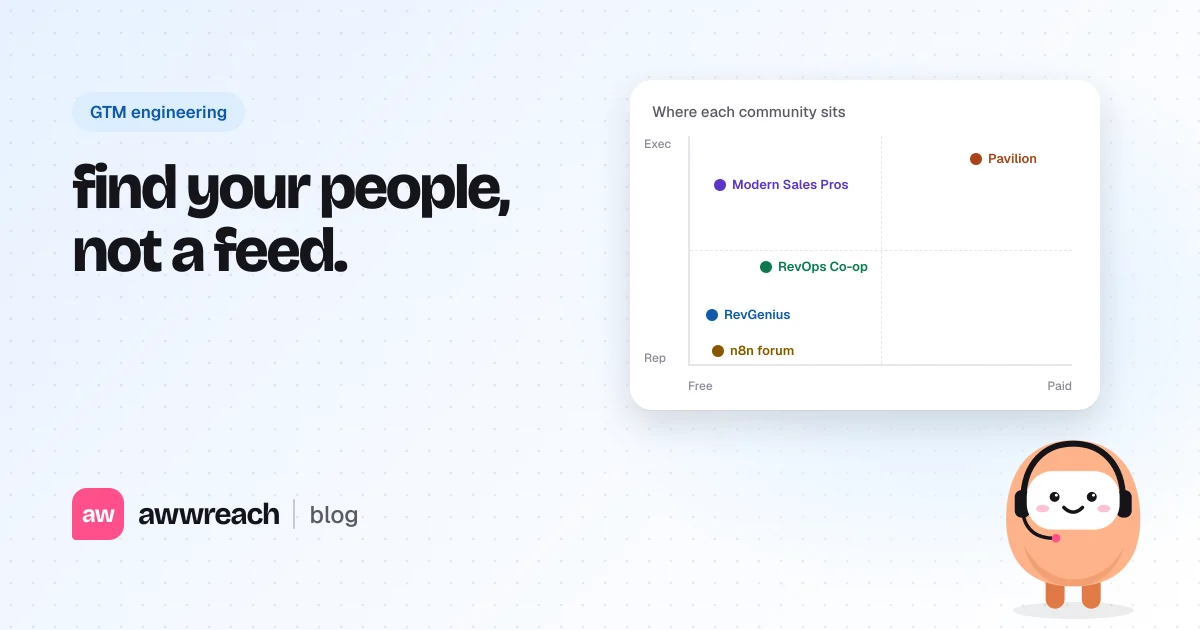
- Post your write-up where GTM people gather. Practitioner communities like RevGenius and RevOps Co-op are good places to start. See our communities guide.
- Message the head of sales or RevOps directly with one play built for their company. That's a permissionless value prop applied to your own job search.
#Interview questions to prepare for
- Walk me through a play you built from signal to meeting. What would you change?
- How would you find companies that are about to need our product, without using funding or hiring signals?
- Here's a messy CSV of 2,000 accounts. How do you dedupe, enrich and prioritise it?
- How do you stop an enrichment workflow from burning credits on bad rows?
- An AI-written message went out with a wrong fact. What guardrails would you add?
- How would you route replies from email and LinkedIn into the CRM so sales can see which play they came from?
Expect a take-home exercise. It's usually a small version of a play. Treat it like a portfolio piece and over-explain your reasoning.
#Start building on day one
The people who make this switch fastest don't wait until they feel ready. They build a small, real play in the first month, show it to someone who sells, and improve it in public. Ninety days of that beats a year of courses.
Frequently asked questions
With focused effort, about three months to build the skills and a portfolio that gets interviews, faster if you already work in sales, RevOps or data.