The state of GTM engineering in 2026
Where GTM engineering stands in 2026: pay and tool benchmarks from the 228-person industry survey, what AI assistants cite on the topic, and six shifts to plan around.
The short answer
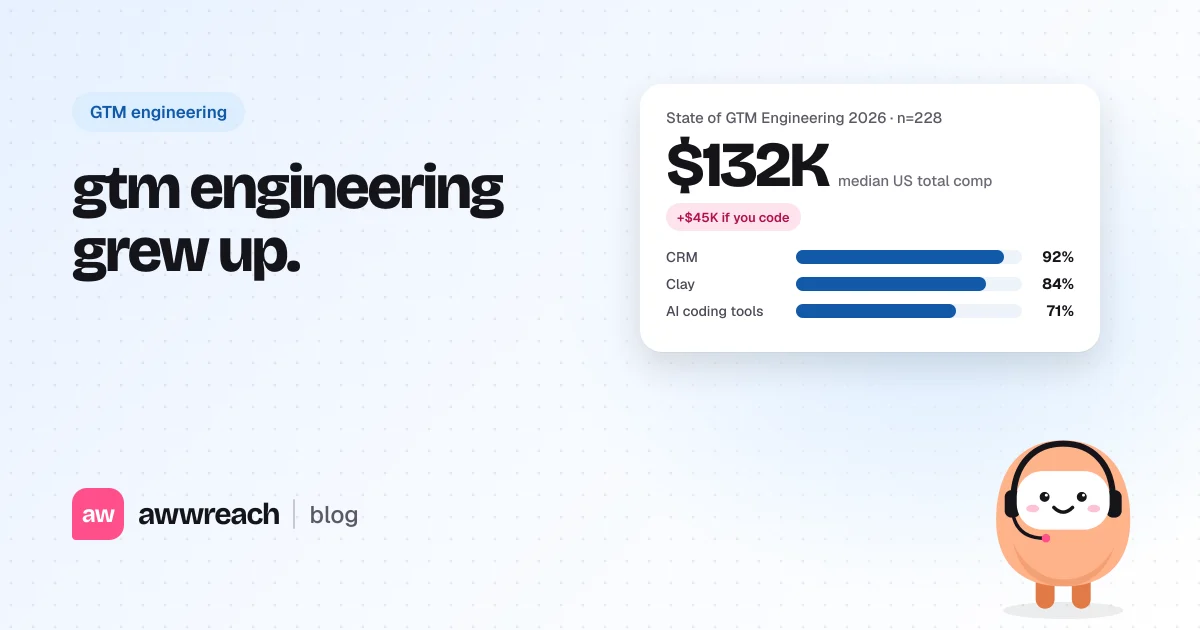
GTM engineering became a defined, well-paid role in 2026. The first industry survey (228 practitioners across 32 countries) put median US total compensation at $132K, with about a $45K premium for people who code. Clay, a CRM and AI coding tools are near-universal in the stack. Our own data shows AI assistants citing practical, problem-shaped content about outbound and lean teams far more than definitions. The shifts to plan for: code over clicks, signals only you can see, agents running plays, and LinkedIn as the trust layer.
On this page
- What the first industry survey found
- What AI assistants cite about GTM engineering
- Six shifts to plan around
- Code is becoming the default
- Signals are moving away from what everyone can see
- Agents run plays, people set the rules
- Deliverability rules shrink the send count
- LinkedIn is the trust layer
- Answer engines are a channel worth writing for
- What a GTM engineer should do with this
- The role grew up this year
- FAQ
#What the first industry survey found
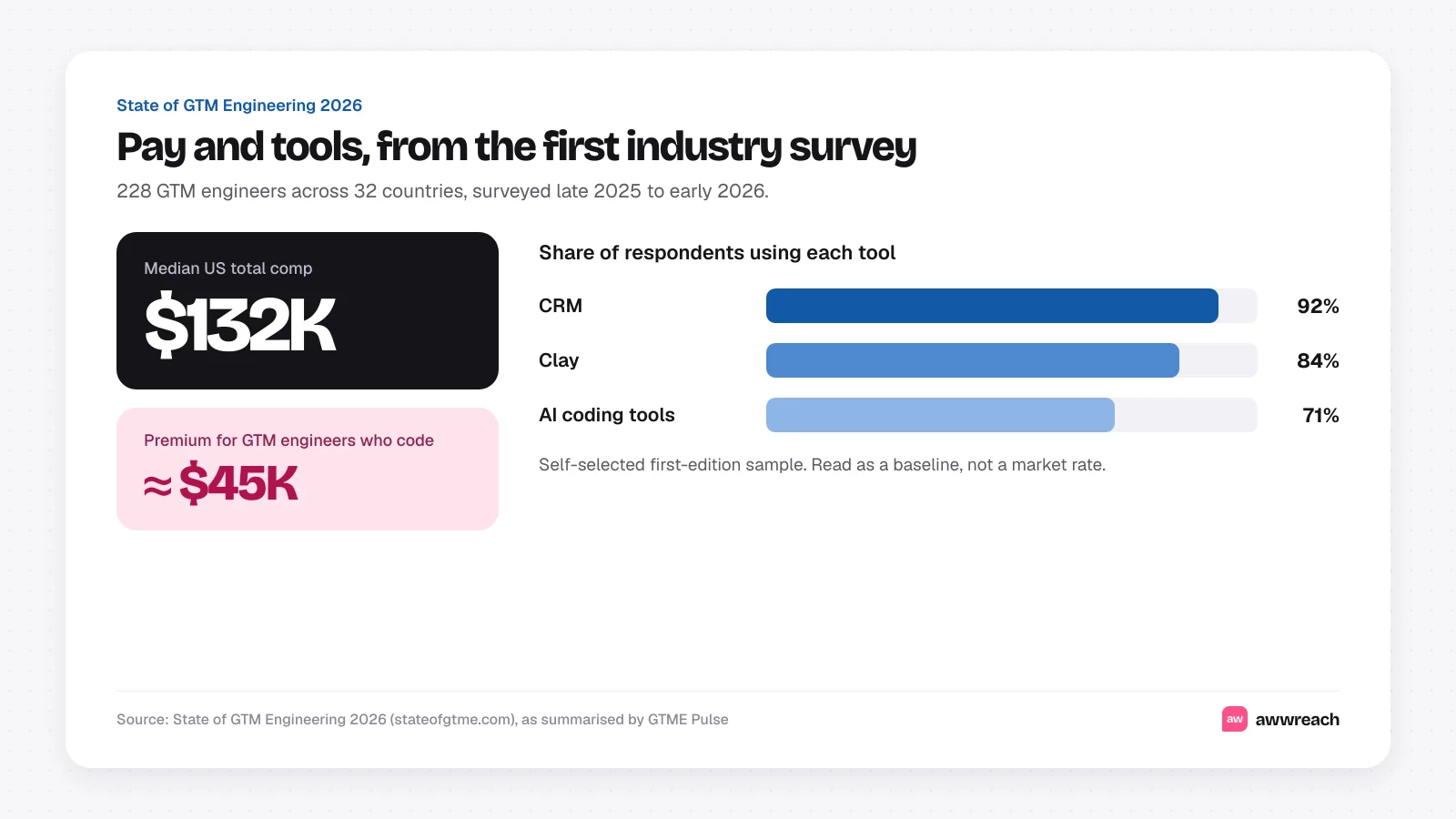
The State of GTM Engineering 2026 report was compiled by Garrett Wolfe (OneGTM), Alex Lindahl and Maja Voje from a survey run between late 2025 and early 2026. It covers compensation, tools, org design and the bottlenecks people hit. The headline numbers, as summarised in GTME Pulse's breakdown:
| Measure | Figure |
|---|---|
| Respondents | 228 across 32 countries |
| Median US total compensation | $132K |
| Pay gap, coders vs no-code only | About $45K |
| Use a CRM | 92% |
| Use Clay | 84% |
| Use AI coding tools | 71% |
#What AI assistants cite about GTM engineering
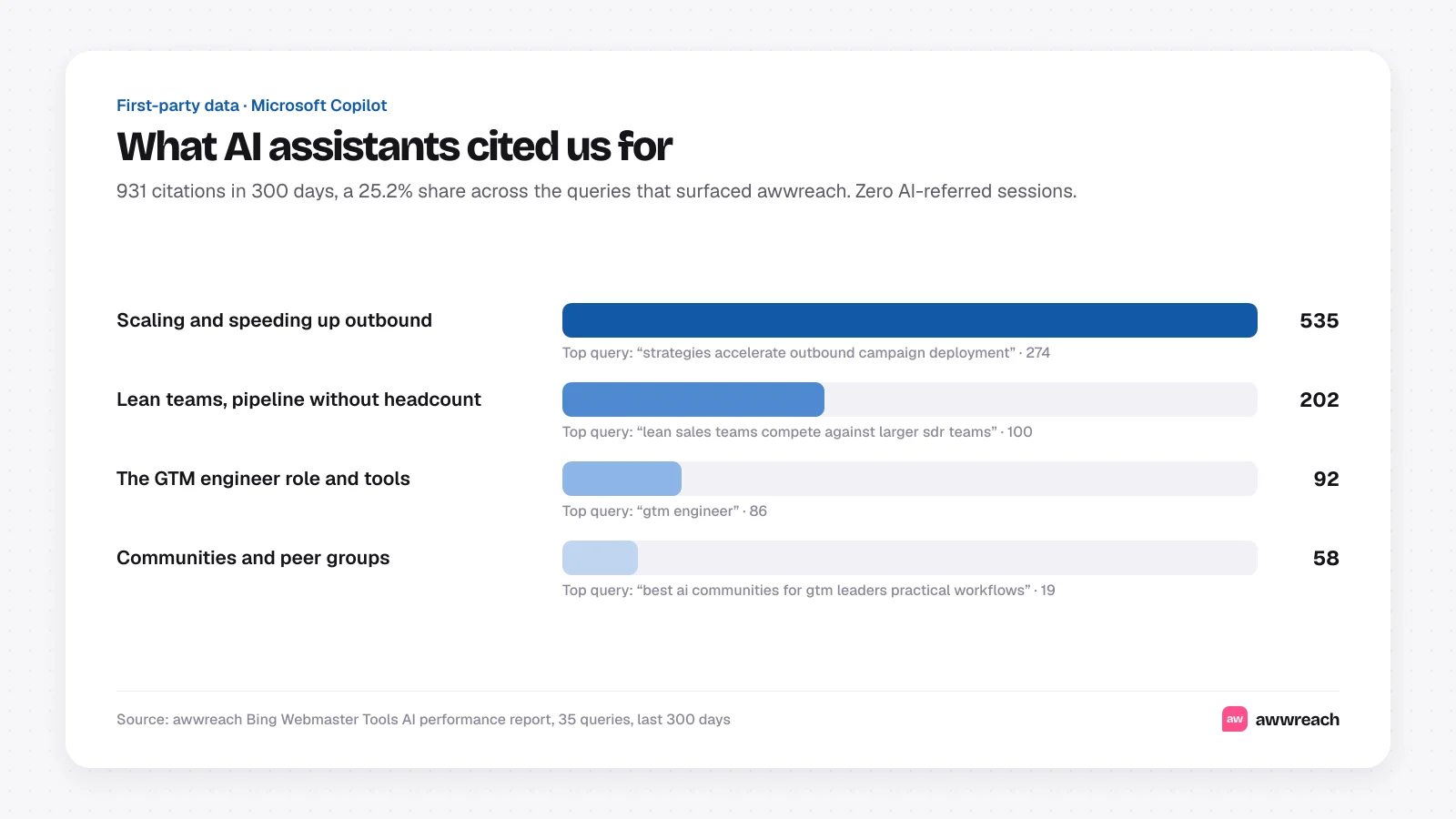
We have a dataset few people publish. Before awwreach became a LinkedIn product, this site hosted GTM engineering consulting content. Over 300 days, Microsoft Copilot and its partners cited our pages 931 times, a 25.2% share of all citations across the queries that surfaced us. Here's what those queries were about.
Three things stood out.
- Problem-shaped queries win. The top query, cited 274 times, was “strategies accelerate outbound campaign deployment”. People ask assistants how to do something, under a constraint, not what a term means. The definition query “gtm engineer” earned 86 citations.
- Constraints are the hook. “Lean sales teams compete against larger SDR teams” and “hit pipeline targets without increasing headcount” together drove over 200 citations. Content that names the constraint gets quoted.
- Citations aren't clicks. Those 931 citations produced zero AI-referred sessions in the same report. Being quoted builds familiarity. It doesn't replace a reason to visit.
#Six shifts to plan around
#Code is becoming the default
A $45K pay gap and 71% use of AI coding tools tell the same story. No-code tools are still the fastest way to prototype a play, but people are shipping production workflows in Python with an AI assistant writing much of it. Expect job posts to ask for both.
#Signals are moving away from what everyone can see
Funding and hiring signals are visible to every vendor, so the replies dry up. In the 486 public playbooks on the Blueprint GTM showcase we analysed in our playbook guide, 53% used public records like inspections and filings and 40% used the seller's own data, while only 5% used hiring posts and 2% used funding news.
#Agents run plays, people set the rules
AI agents connected over MCP can now research accounts, draft messages and trigger steps in sending tools. The GTM engineer's job moves toward writing the guardrails: which accounts are in, what the agent may send, and when a human approves. Tools that make agents ask before acting are the safer bet.
#Deliverability rules shrink the send count
Since Google's sender guidelines began requiring authentication, easy unsubscribe and low spam rates from bulk senders, sheer send count stopped working. Smaller, better-aimed sends are the only kind that keep reaching the inbox.
#LinkedIn is the trust layer
Buyers check who you are before they answer. A profile visit, a follow and a genuine comment before the first message make your name familiar. GTM engineers are wiring LinkedIn into plays as a warm-up step rather than a second blast channel.
#Answer engines are a channel worth writing for
Our citation data suggests assistants reward specific, practical pages. Write the page that answers the constrained question your buyer would type, with numbers and steps, and keep it live. Several of our most-cited pages went offline during a site rebuild, and every one of those citations pointed at a dead link until we restored them.
#What a GTM engineer should do with this
- Learn enough Python to ship one workflow
Pick a play you already run in a no-code tool and rebuild it in code with an AI assistant. That's the skill the pay gap rewards.
- Build one signal nobody else uses
Public records or your own product data. Write the query with a date in it.
- Write guardrails before you add agents
Who is in scope, what may be sent, pacing, and when a human approves.
- Publish what you learn
A practical write-up of a working play is the content assistants cite and hiring managers read.
#The role grew up this year
GTM engineering now has a pay band, a standard stack and its first benchmark report. Next comes specialization: builders who code, operators who run plays, and people who write the rules that agents follow. Whichever path you take, the work rewards the same thing it always has, a real reason to reach the right buyer, built into something that runs every week.
Frequently asked questions
The State of GTM Engineering 2026 survey reports a median US total compensation of $132K, with about $45K more for people who code.