The lean B2B GTM motion: beat bigger SDR teams
How a lean sales team hits pipeline targets without adding headcount: where big SDR teams really win, five moves that close the gap, and what to buy before an AI SDR.
The short answer
A large SDR team wins on hours, not insight: more people doing research, writing and follow-ups by hand. A lean team closes that gap by moving research and list building into systems, narrowing to accounts with a provable problem, and keeping reps on conversations only. The usual first hire is a GTM engineer who builds those systems, ahead of more SDRs or an AI SDR.
On this page
- Where a big SDR team's advantage really comes from
- Five moves that let a small team outpace a big one
- Narrow to accounts with a problem you can prove
- Move research and list building into systems
- Give before you ask
- Warm up on one channel before adding more
- Reps run conversations, not tools
- AI SDR or GTM engineer: what to buy first
- A Series B team without a sales ops hire
- Measuring sales efficiency honestly
- Small teams win on aim
- FAQ
#Where a big SDR team's advantage really comes from
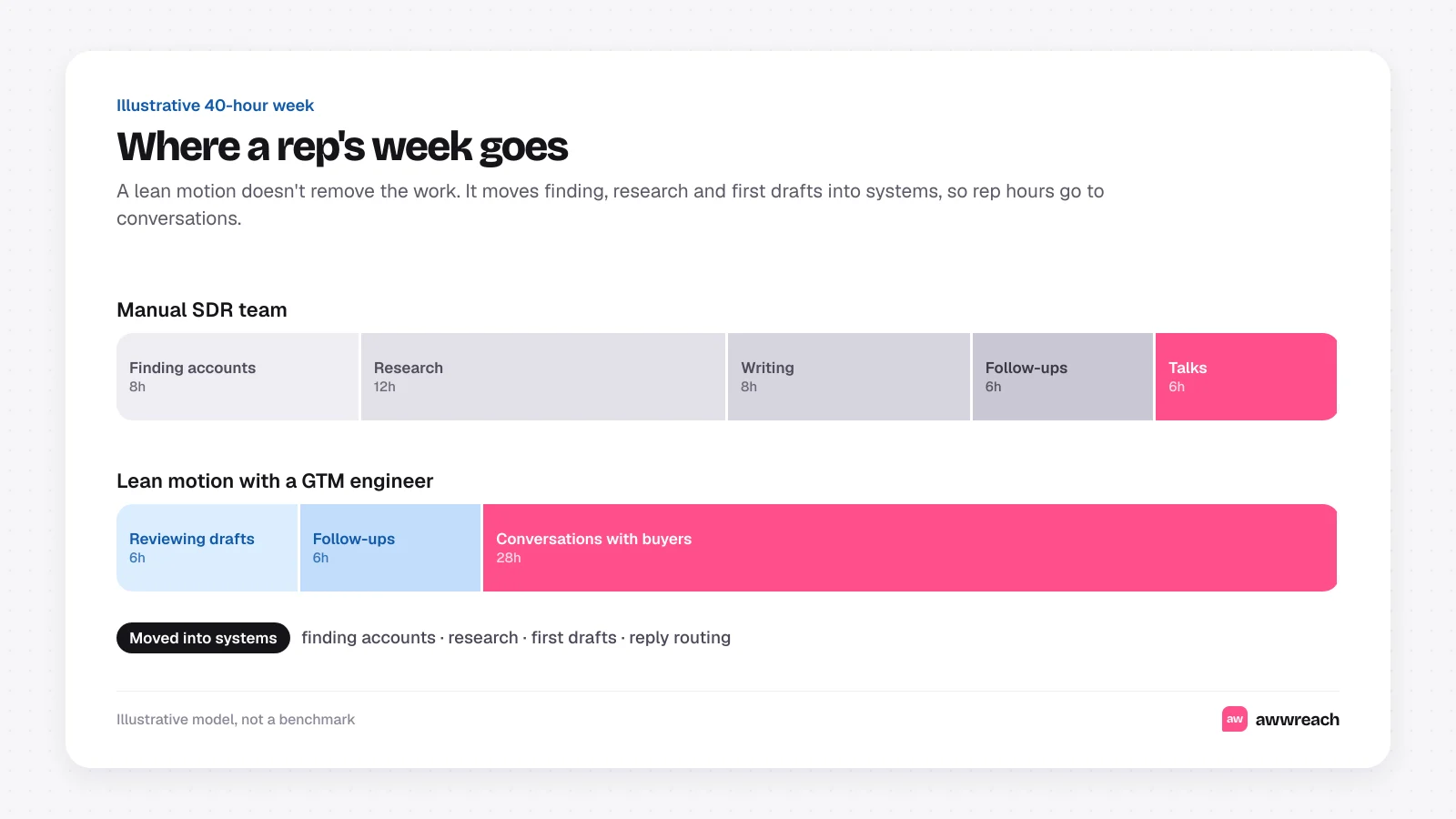
Ten SDRs don't know more about your buyers than two. They have more hours. Those hours go into four jobs: finding accounts, researching each one, writing the first message, and chasing follow-ups. Only the last stretch, the actual conversation, needs a person.
So the question for a lean team isn't “how do we send as much as them?” It's “which of those four jobs can a system do, and how do we spend human hours only where a human changes the outcome?”
#Five moves that let a small team outpace a big one
#Narrow to accounts with a problem you can prove
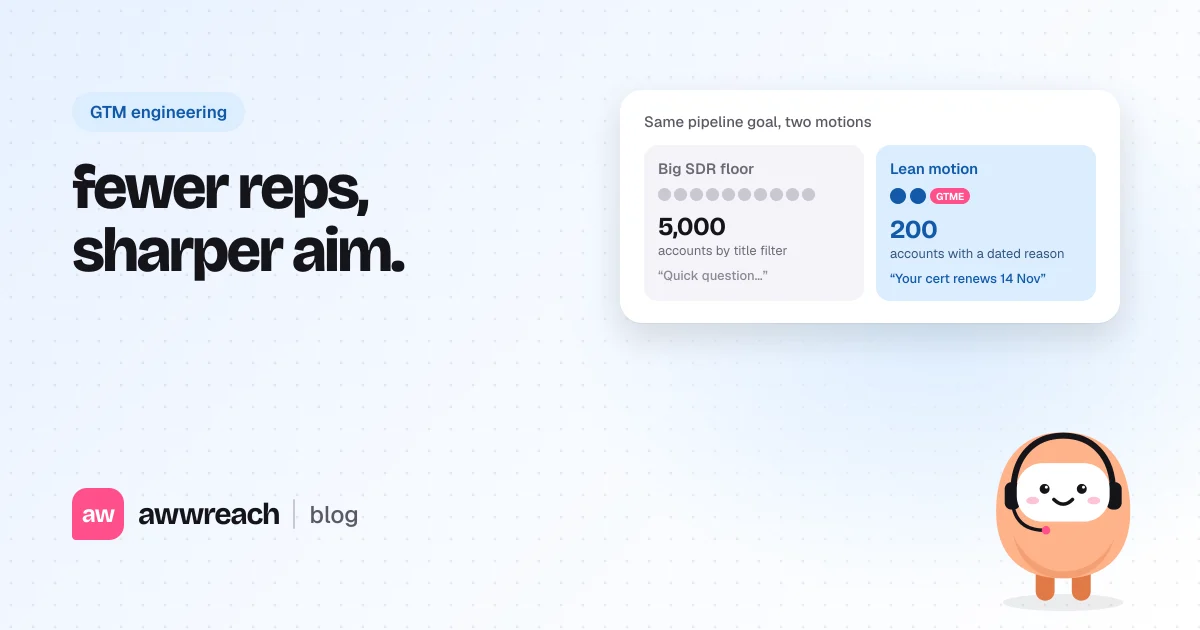
Big teams can afford wide lists because they have hands to absorb low reply rates. A lean team can't. Define each segment by a detectable problem: an expiring certification, a tool you replace, a public complaint pattern, a leader new to the seat. A list of 200 accounts with a dated reason beats 5,000 that match a title filter.
#Move research and list building into systems
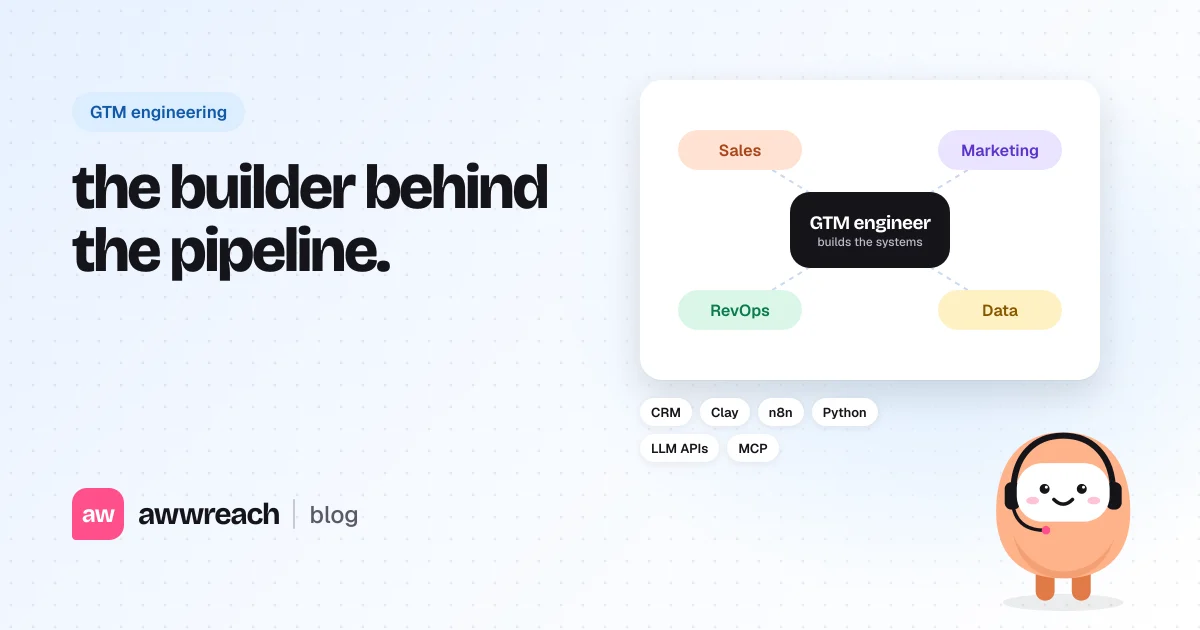
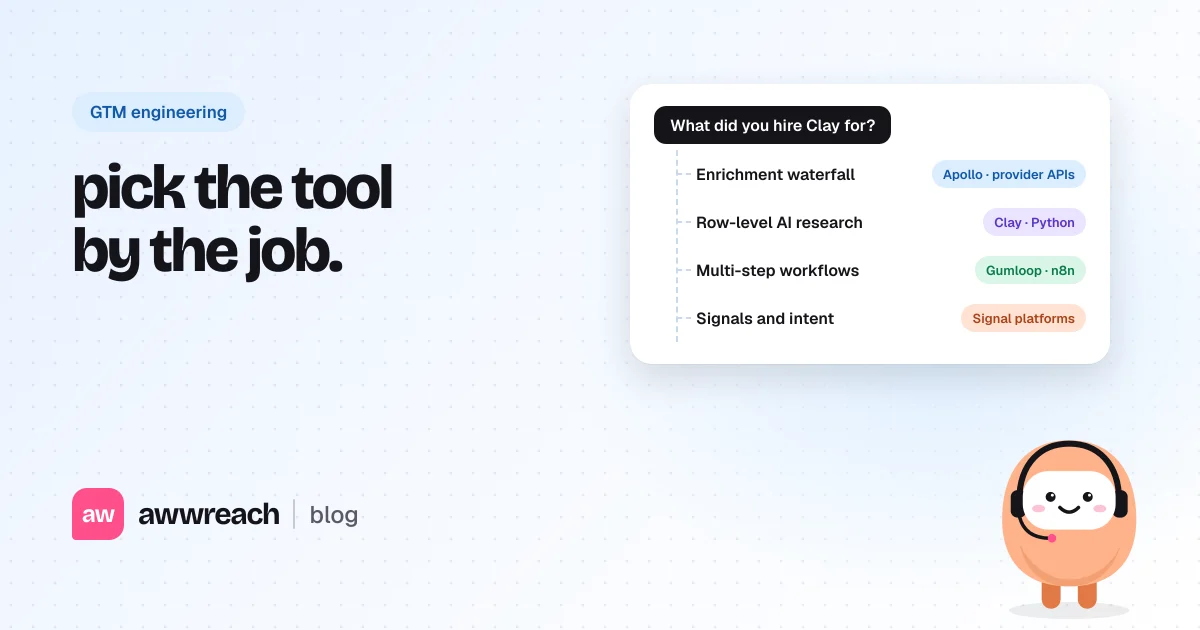
Enrichment, account research, signal checks and first-draft personalization are repeatable. A GTM engineer builds them once in Clay, n8n, a warehouse or plain code, and they run for every new account. This is the single biggest lever, and it's why the GTM engineer title has spread so fast.
#Give before you ask
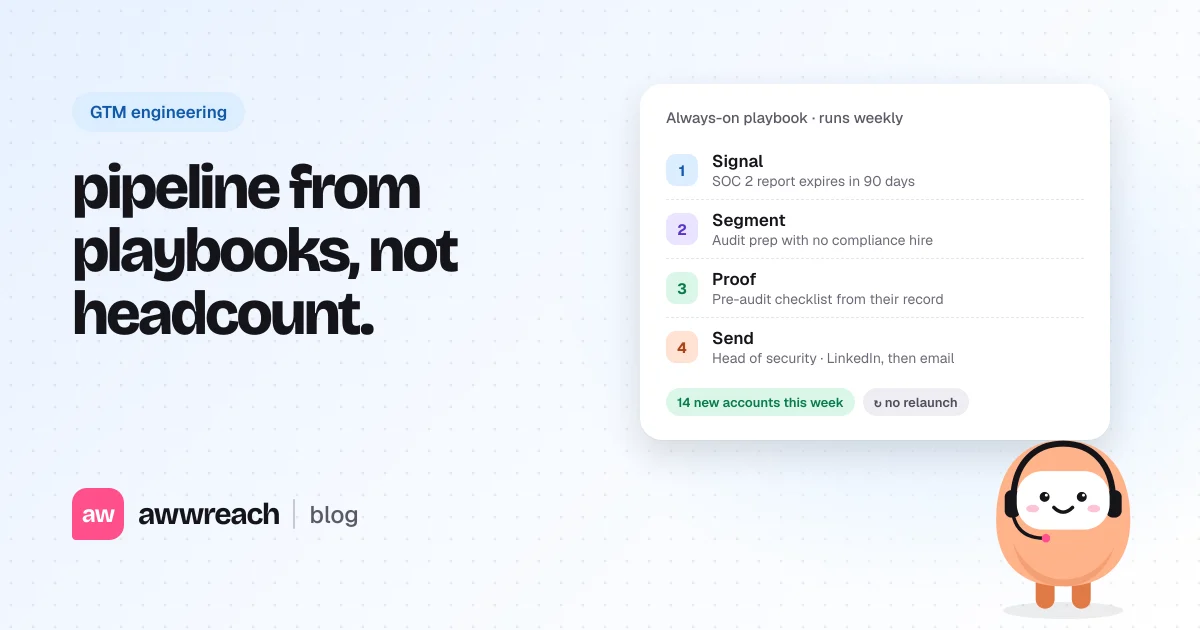
Send something useful in the first message: a benchmark, a checklist built from their public record, a short teardown. A lean team's message has to earn the reply on its own, because there's no army of follow-ups behind it. The always-on playbook frame in our outbound playbook guide shows how to template this.
#Warm up on one channel before adding more
Multichannel sounds efficient, but three half-built channels cost more than one done properly. Pick the channel where your buyers already pay attention. For many B2B buyers that's LinkedIn for familiarity and email for the proof. Add the second only when the first runs without babysitting.
#Reps run conversations, not tools
Rep time goes to replies, calls and follow-ups that need judgment. If a rep is copying data between tabs, that's a system someone hasn't built yet. Track it as a bug.
#AI SDR or GTM engineer: what to buy first
AI SDR tools promise to replace the whole top of funnel. Some save real time on drafting and follow-ups. But an AI SDR still needs someone to decide who to contact, why now, and what proof to send. Without that, it sends generic messages faster.
| Option | What you get | What it can't do | Best when |
|---|---|---|---|
| Another SDR | More hours of research, writing and calls | Scale past one person's week | Your messaging already works and you need more conversations |
| AI SDR tool | Drafting and follow-ups without added headcount | Decide which signal matters or build your data | You have clean segments and a proven message |
| GTM engineer | Systems that find accounts, research them and route replies | Take sales calls | Your bottleneck is targeting and research, not talk time |
For a lean team the order that usually works: GTM engineer first to build the signal and research layer, then an AI writing step inside that system, then more reps once there are more good conversations than people to hold them.
#A Series B team without a sales ops hire
Plenty of Series B companies run with three to eight sellers and no dedicated sales ops. Here's a minimum setup that keeps a team that size productive.
- One source of truth for accounts. Usually the CRM, with enrichment writing back into it, not living in side spreadsheets.
- Two or three always-on plays, each with a written signal, segment sentence and proof asset.
- A reply router that sends every reply, from every channel, into the CRM with the play name attached.
- A weekly 30-minute review: new accounts found, replies, positive replies and meetings, per play.
- One owner for the system. That's the GTM engineer, or a technical founder until you hire one.
#Measuring sales efficiency honestly
Send counts flatter big teams. Lean teams should track numbers that reward precision.
| Measure | How to calculate | Why it matters |
|---|---|---|
| Meetings per rep-hour | Meetings held divided by hours reps spent on outbound | Shows whether systems are freeing rep time |
| Positive reply rate per play | Interested replies divided by people contacted, per play | Finds the plays worth keeping |
| Pipeline per 100 accounts | Opportunity value created per 100 accounts contacted | Rewards narrow, high-fit segments |
| Time to launch a play | Days from idea to first send | Tracks how reusable your system is |
#Small teams win on aim
A lean team doesn't beat a big SDR floor by copying it with fewer people. It wins by spending human time only where a human changes the result, and letting systems do everything else. Build the research layer first, give before you ask, and measure the motion by meetings per hour rather than messages sent.
Frequently asked questions
Yes, when it competes on precision rather than send count. Narrow segments with a provable problem, research done by systems and a useful first message close most of the gap.