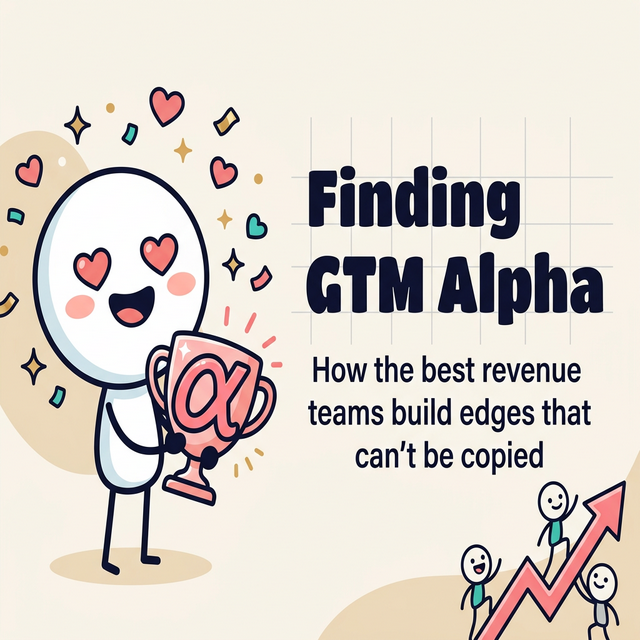
Here's the uncomfortable truth about modern B2B sales: if you're using the same data providers, the same targeting filters, and the same playbooks as your competitors, you've already lost the edge. The market doesn't reward sameness. It rewards teams who can see signals others miss—and move on them faster than anyone else.
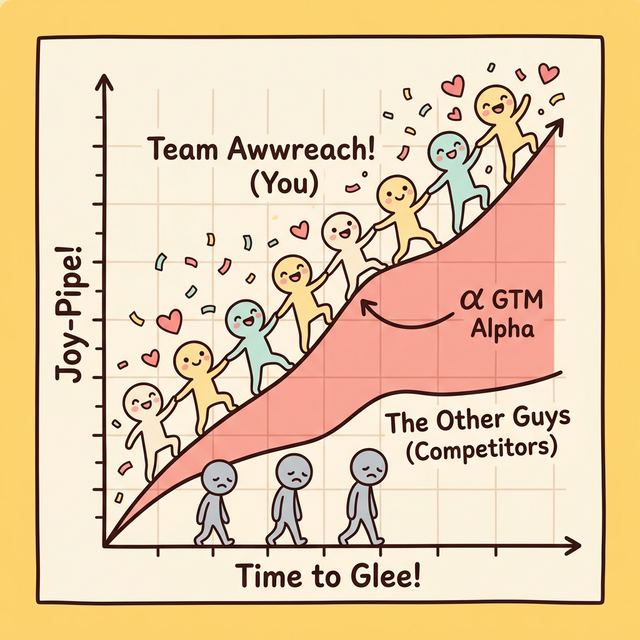
The Commodity Trap in GTM
Most outbound teams are unknowingly in a commodity race. They pull from the same intent data platforms, filter by the same firmographic criteria — 50-500 employees, SaaS, Series A — and fire off the same cold email sequences with slightly different subject lines. The result? Inboxes flooded with near-identical pitches, response rates in freefall, and a growing sense that 'outbound is dead.'
Outbound isn't dead. Commodity outbound is dead. The teams still winning with outbound in 2026 aren't working harder — they're working with better inputs. They've found what we call 'GTM alpha': a repeatable edge built on data your competitors don't have, plays your competitors haven't thought of, and a system that lets you experiment faster than anyone can copy you.
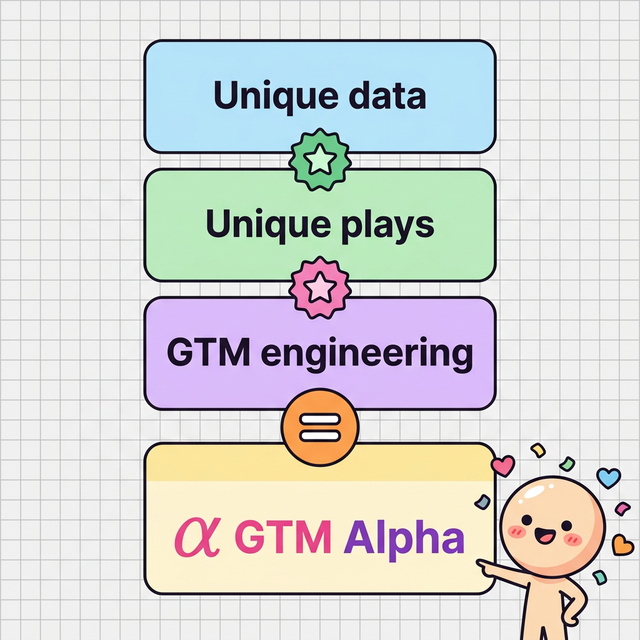
Build a Unique Data Advantage
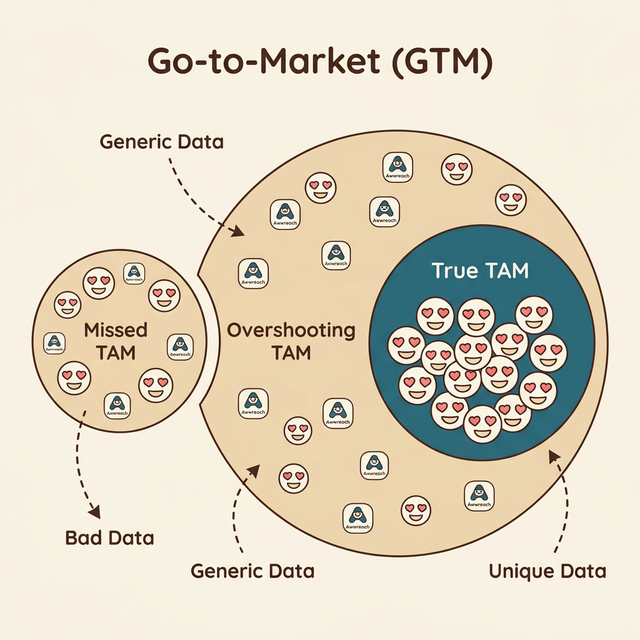
Accurate data is the floor, not the ceiling. If your CRM has bad phone numbers, bouncing emails, and stale job titles, fix that first — nothing else matters until your foundation is solid. But once you've solved for data quality, the real game begins: finding data no one else is looking for.
The best signal is one that's invisible to your competitors because it requires effort, creativity, or domain knowledge to collect. Think of it this way: what does your sales team manually research before every call? What would they find if they had 50 interns and a week? That's the signal worth automating. AI agents today can do that research at scale — reading websites, parsing documents, scanning job boards, and synthesizing unstructured information into structured signals you can act on.
Some of the most effective unique signals we've seen GTM teams build:
- Hiring velocity as intent: Companies posting 3+ sales roles in 30 days are in growth mode — and need infrastructure to support it. Automate a watch on job boards for this pattern in your ICP and you have a time-sensitive, high-intent trigger.
- Tech stack gaps: You can infer what tools a company is missing by combining what they list on their careers page, what their team endorses on LinkedIn, and what shows up in job descriptions. If they're hiring a 'RevOps Manager' but have no CRM mentioned anywhere, that's your opening.
- Content topics as buying signals: Track what blog posts, podcasts, or LinkedIn content your ICP is engaging with. A company whose leadership is suddenly posting about 'pipeline efficiency' or 'AI automation' is signaling a priority shift — often before any formal vendor evaluation kicks off.
- Funding-to-headcount lag: Companies that raised 6–12 months ago but haven't yet expanded their team are about to. That's a window where budget exists but operational capacity hasn't caught up — exactly when they're receptive to tools that accelerate output.
The common thread: these signals require context about your buyer that generic data providers don't have. They're specific to what your product solves. Which means you have to build them yourself — and that's exactly what makes them defensible.
Turn Signals Into Automated Plays
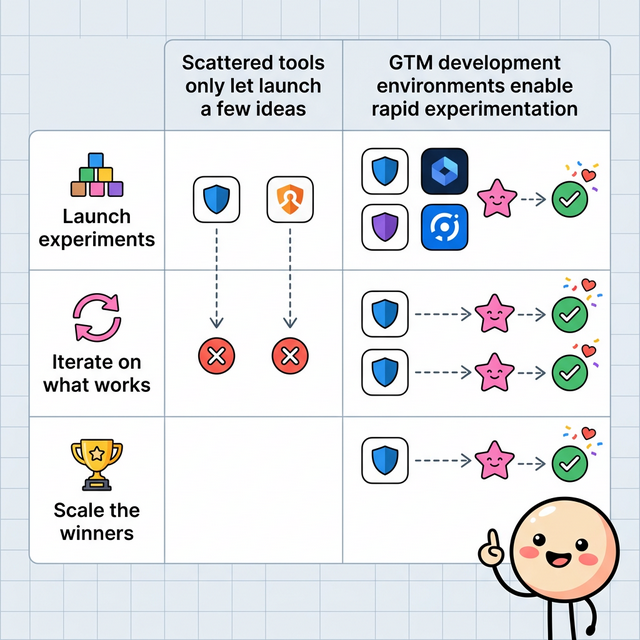
Data without action is just a spreadsheet. The teams generating real results have connected their unique signals directly to automated workflows — so when a trigger fires, a play runs, without anyone needing to touch it.
What makes a play 'high-alpha' isn't complexity. It's relevance. A highly personalised message that arrives at exactly the right moment — when a company just crossed a funding threshold, or just posted a job that signals product-market fit — will outperform any generic sequence every time. The personalisation isn't manufactured. It's earned, because it's grounded in something real.
Some frameworks for building high-alpha plays:
- Event-triggered outreach: Rather than batching lists monthly, build sequences that fire within hours of a trigger — a funding announcement, a new C-suite hire, a product launch. Timing is personalisation.
- Micro-segment campaigns: Instead of one campaign for 'SaaS companies', build five campaigns for specific sub-segments with different pain points. A 10-person message written for exactly the right person will always beat a 1-person message sent to a hundred.
- Dynamic personalisation at scale: Use AI to generate genuinely tailored first lines, case study references, or pain-point callouts based on what your enrichment workflow surfaced about each prospect. Not 'Hi {{first_name}}' — but 'I noticed your team is hiring for a RevOps role, which usually means...'
- Multi-channel sequencing on signals: When a strong buying signal fires, don't just email. Trigger a LinkedIn connection request, a targeted ad impression, and a direct mail piece — all coordinated through automation. The prospect feels like you're everywhere. You didn't lift a finger.
The GTM Engineering Mindset
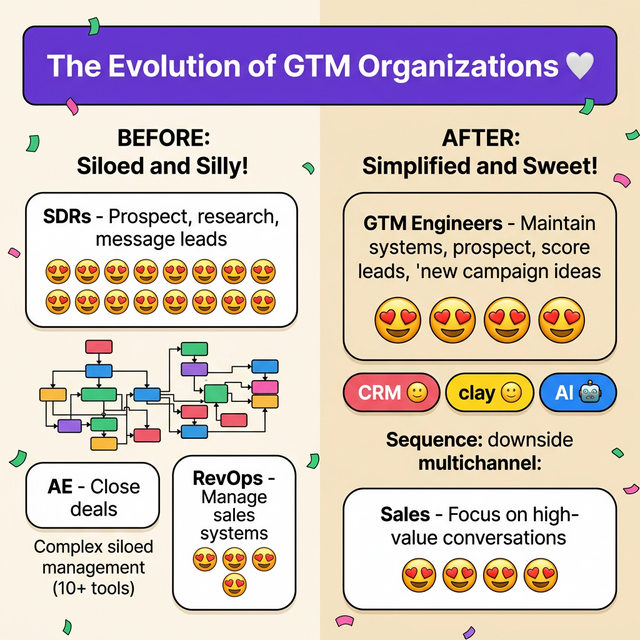
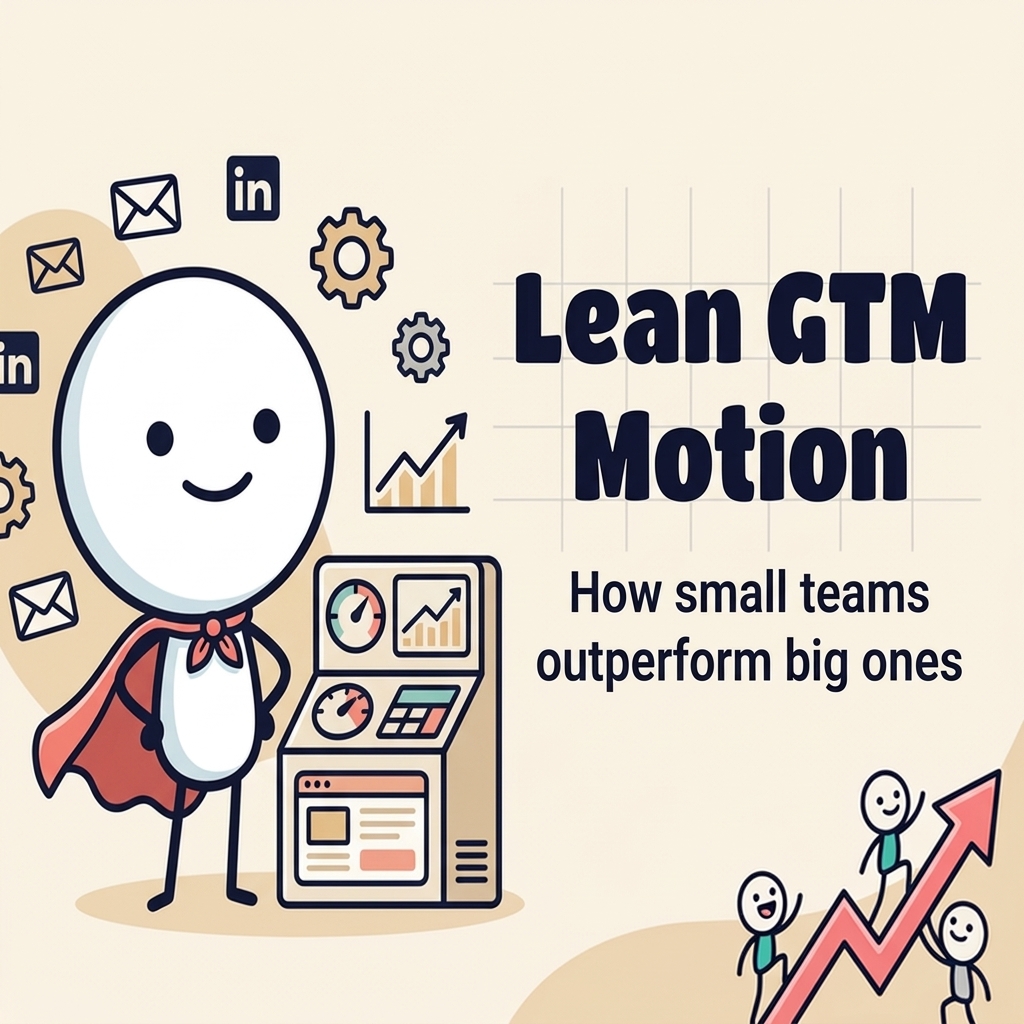
The teams running these plays didn't build them by accident. They've adopted what we think of as the GTM engineering mindset: treating revenue growth like a systems problem, not a people problem.
Traditional sales orgs are structured around roles: SDRs find leads, AEs close them, RevOps maintain the CRM. Everyone does their job, but the system rarely learns. An SDR who discovers that companies with a specific compliance certification convert at 3x never has a way to turn that insight into infrastructure.
GTM engineering changes that. Instead of isolated roles, you have a connected system where insights feed back into workflows, workflows generate data, and that data improves the next round of targeting. It's a flywheel, not an assembly line. The technical levers — enrichment APIs, workflow automation (n8n, Clay, Make), AI agents, CRM data pipelines — become first-class tools, not afterthoughts.
You don't need a dedicated 'GTM Engineer' to start. What you need is the habit of asking: 'Can this be automated? Can this signal be systematized? Can this insight be turned into a workflow?' Start there, and the organisation evolves to match.
Staying Ahead: The Experimentation Loop
Every edge is temporary. What works today will be copied, saturated, or made obsolete by a shift in buyer behaviour. The teams with the most durable GTM alpha aren't those with the best current playbook — they're the ones who can generate new playbooks faster than the market can catch up.
That means building a genuine experimentation loop: hypothesise, test, measure, and iterate on a weekly — not quarterly — cadence. Launch a new micro-segment campaign, give it two weeks, and make a call. Run two variants of a signal-triggered email, see which framing resonates, and scale the winner. The goal isn't to find one great play. It's to build the capability to find the next great play, and the one after that.
Winning GTM teams share one trait above all others: they're never satisfied with what's working now. Not because they're restless — because they understand that the market rewards whoever gets to the next insight first. Stay curious. Stay experimental. Stay ahead.