Clay alternatives for GTM engineers in 2026
The right Clay alternative depends on what you use Clay for. Gumloop, n8n, Apollo, Make, signal tools and plain code compared by job, plus GTM engineer vs Clay vs Gumloop.
The short answer
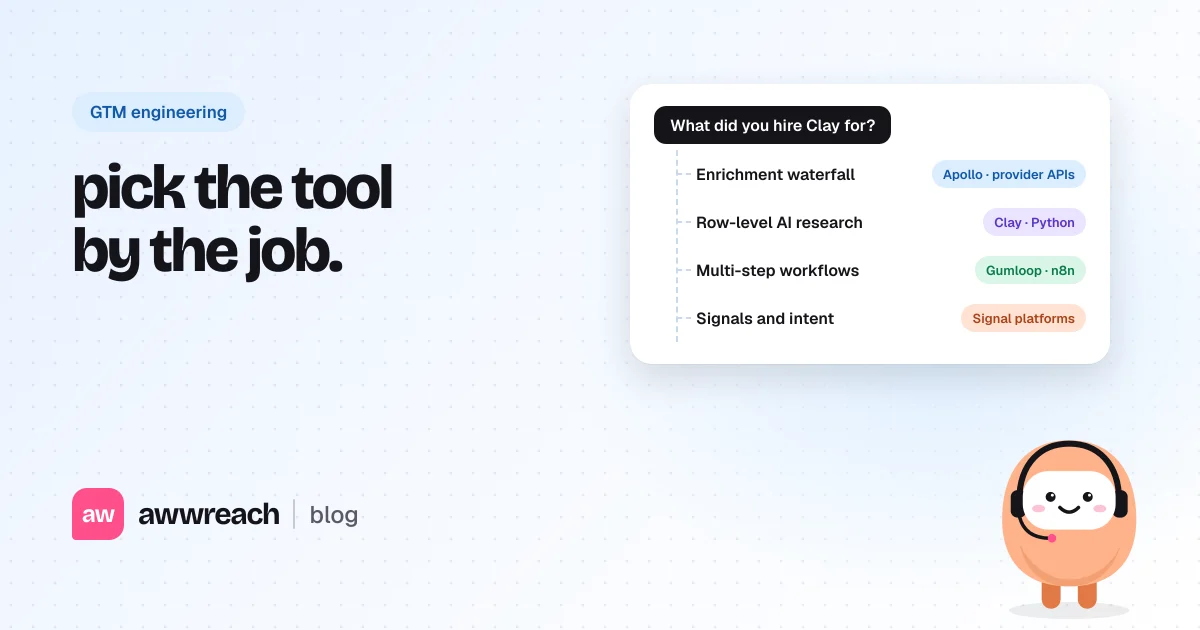
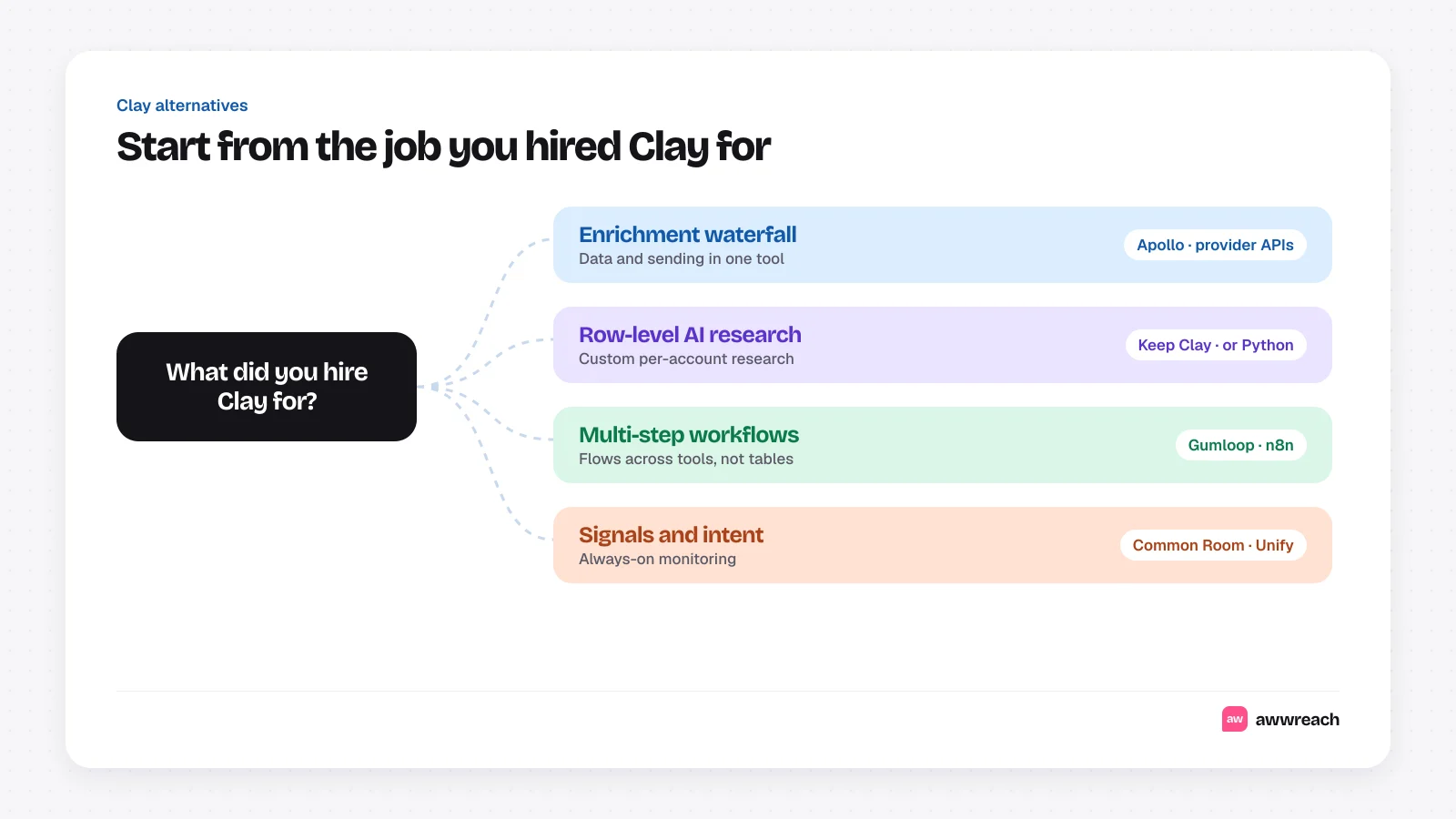
Clay bundles several jobs: an enrichment waterfall across many data providers, AI research columns, list building and light workflow glue. Most alternatives replace one of those jobs, not all of them. Apollo covers data plus sequencing. Gumloop and n8n are stronger for multi-step AI workflows. Make and Zapier glue apps together. Signal tools catch intent. Python with an AI coding assistant can replace almost anything if someone owns it. Name the job first, then pick.
On this page
- First, name the job you hired Clay for
- Alternatives by job
- For contact data and sequencing: Apollo
- For multi-step AI workflows: Gumloop
- For workflows you control: n8n
- For glue between apps: Make or Zapier
- For intent and signals: signal platforms
- For anything, if someone owns it: code
- The comparison
- GTM engineer vs Clay vs Gumloop
- A checklist before you switch
- Replace the job, not the logo
- FAQ
#First, name the job you hired Clay for
People look for Clay alternatives for three reasons: cost as credits add up, a workflow that outgrew a spreadsheet, or a team that never really used it. Each points to a different answer. Start by listing what your Clay tables actually do.
#Alternatives by job
#For contact data and sequencing: Apollo
If your Clay tables mostly find emails and job titles before pushing to a sequencer, Apollo covers both in one place. You lose Clay's multi-provider waterfall, so match rates on niche segments are usually lower. It's often the better fit for a small team that doesn't need custom research columns.
#For multi-step AI workflows: Gumloop
Gumloop is a no-code builder for AI workflows: chains of steps that scrape a page, run it through a model, branch on the answer and write the result somewhere. Where Clay thinks in rows, Gumloop thinks in flows. It suits ops people who want AI automation across tools rather than an enrichment table.
#For workflows you control: n8n
n8n is a workflow automation tool you can self-host, with code steps and AI agent steps alongside hundreds of app integrations. GTM engineers pick it when they want to own the infrastructure, avoid per-row credits or mix code with visual steps. It takes more setup than Clay or Gumloop.
#For glue between apps: Make or Zapier
If Clay is mainly moving data between a form, a CRM and Slack, Make or Zapier does that more cheaply and simply. Neither is built for enrichment at row level.
#For intent and signals: signal platforms
Tools such as Common Room and Unify gather signals like website visits, product usage, community activity and job changes, then help you act on them. They overlap with Clay when you've been using it to watch for changes. They don't replace custom research.
#For anything, if someone owns it: code
Python, provider APIs and an AI coding assistant can rebuild nearly any Clay table. 71% of GTM engineers in the State of GTM Engineering survey already use AI coding tools, per GTME Pulse. The trade-off is ownership: someone has to maintain it when an API changes.
#The comparison
| Tool | Best at | Beats Clay when | Clay still wins when |
|---|---|---|---|
| Apollo | Contact data plus sequencing | You need data and sending in one tool | Segments are niche and need waterfall enrichment |
| Gumloop | No-code AI workflows across tools | The job is a multi-step flow, not a table | You need many data providers per row |
| n8n | Self-hosted workflows with code steps | You want control and no per-row credits | Speed of setup matters more than control |
| Make or Zapier | Moving data between apps | The job is simple glue | Any enrichment or research is involved |
| Signal platforms | Catching intent and changes | You need always-on monitoring | You need custom research per account |
| Python and APIs | Anything, fully custom | You have an owner and steady needs | You're still testing plays quickly |
#GTM engineer vs Clay vs Gumloop
This comparison comes up often, and it mixes a role with two tools. Clay and Gumloop are tools that make work faster. A GTM engineer decides what work to do: which signal matters, which accounts to skip, what proof to send and how replies reach sales.
| GTM engineer | Clay | Gumloop | |
|---|---|---|---|
| What it is | A person who builds pipeline systems | Data enrichment and AI research in tables | AI workflow builder |
| Decides who to contact | Yes | No, runs the logic it's given | No, runs the logic it's given |
| Best output | Plays that run every week | Enriched, researched account lists | Automated multi-step flows |
| Fails when | Spread too thin across tools | Nobody owns the tables | Flows aren't monitored |
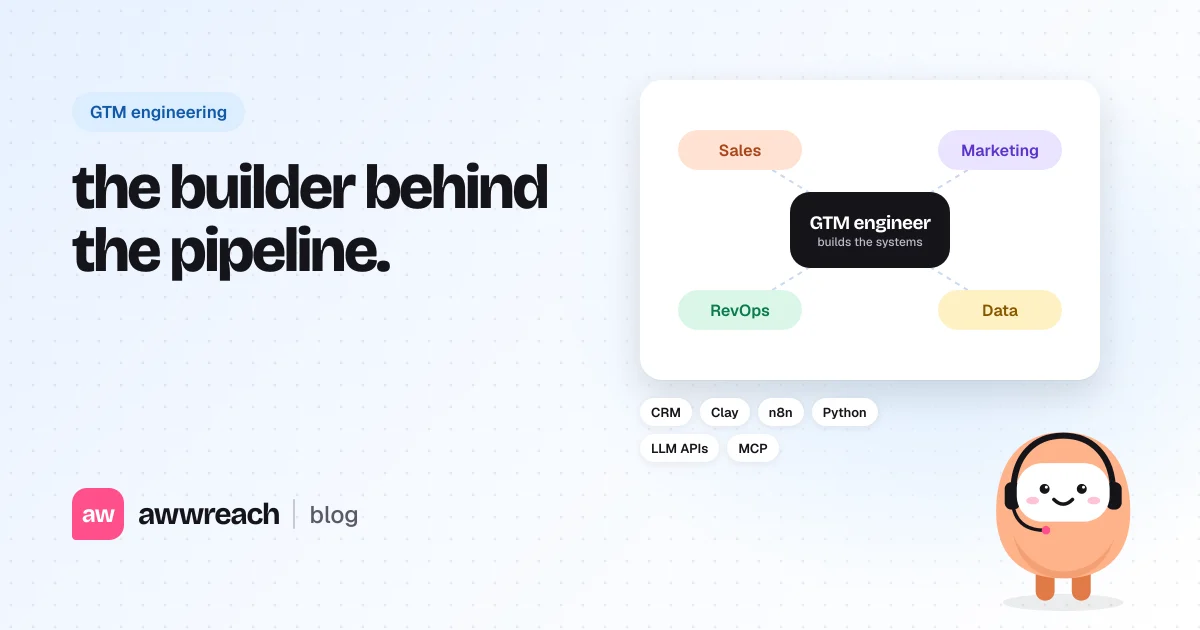
The answer for sales operations automation is rarely one of the three. It's a GTM engineer using one or two tools well. More on the role in What is a GTM engineer?
#A checklist before you switch
- List every Clay table and what it feeds
Note the trigger, the providers used, credits per row and where results go.
- Mark each table by job
Enrichment, research, glue or signals. That tells you which alternative covers it.
- Rebuild the most expensive table first
Run old and new side by side on 200 rows and compare match rate, accuracy and cost.
- Keep what Clay does best
A common split is to move glue and signals out and keep Clay for waterfall enrichment. Paying for one job is still cheaper than paying for four.
#Replace the job, not the logo
Switching tools rarely fixes a pipeline problem on its own. The teams that save money and get better results name the job, move the parts another tool does better, and keep one owner for the whole system. Do that and the logo on the tool matters far less.
Frequently asked questions
It depends on the job. Apollo for data plus sequencing, Gumloop or n8n for AI workflows, Make or Zapier for app glue, and signal platforms for intent monitoring.