LinkedIn networking for founders, without a cold pitch
How founders can meet investors, operators and first customers on LinkedIn: split your list by what you need, earn attention with their own ideas, and make small asks that are easy to say yes to.
The short answer
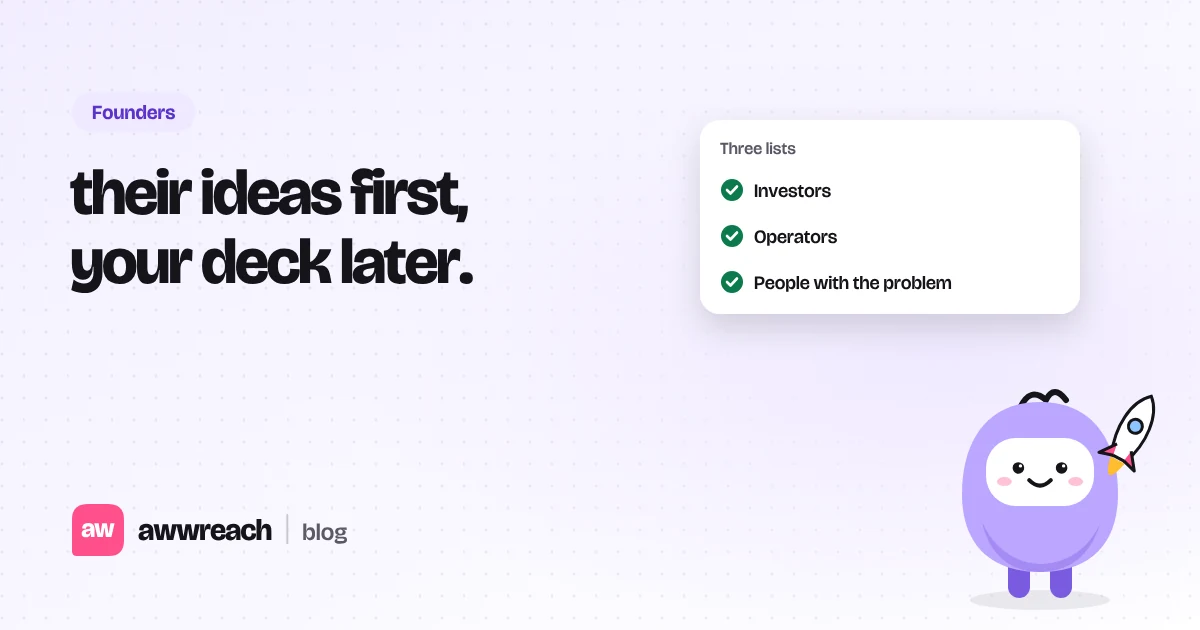
Founders waste LinkedIn by sending one pitch to everyone. Split your list into three: investors, operators you can learn from, and people who have the problem you solve. Each list gets a different first ask. Start with their ideas, not your deck: react to their posts, add one comment with a real data point, then connect with a note that ties their topic to what you're building. Keep each list to ten or twenty people so every note stays specific.
On this page
#Three lists, three different asks
| List | Good first ask | Don't ask yet |
|---|---|---|
| Investors | 20 minutes on their thesis | A cheque or a deck review |
| Operators one step ahead | How they solved one specific problem | A job or an intro to their investors |
| People with the problem | Whether the problem is real this quarter | A demo in the first note |
Mixing these up is the most common founder mistake. A buyer who gets an investor-style pitch feels sold to, and an investor who gets a customer-discovery question wonders why you're wasting their time.
#Two weeks with one person
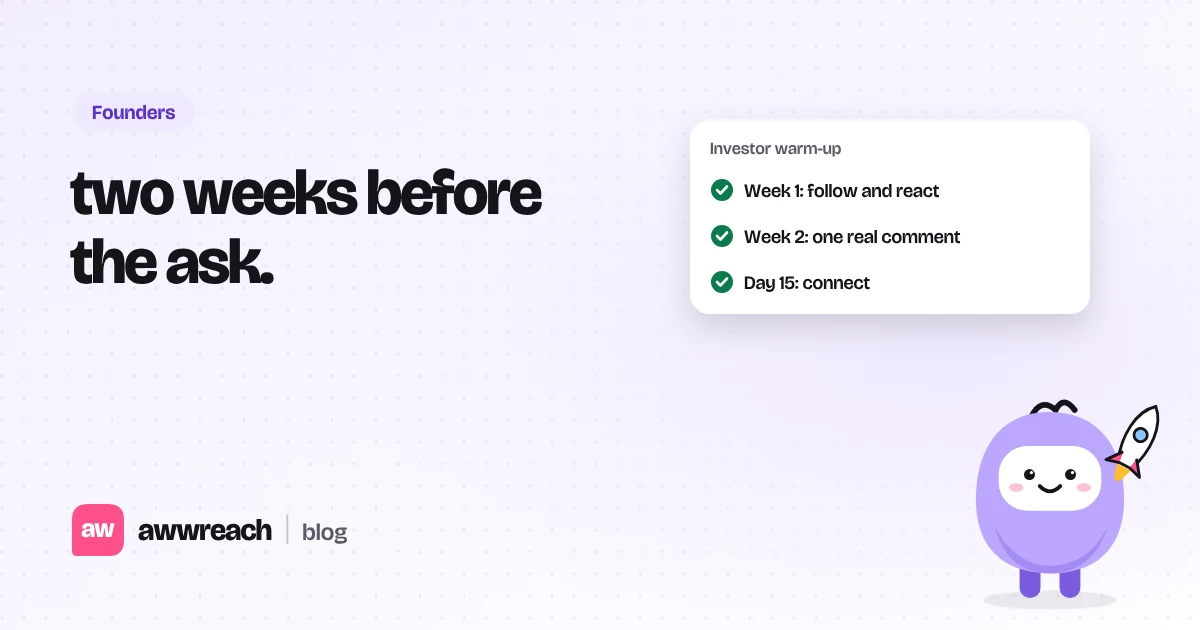
- Read three of their posts
Write their theme in one line. If you can't, they're probably not the right person this month.
- React, then comment once
The comment should add a customer quote, a metric or a disagreement you can defend in two sentences.
- Connect with that theme
One sentence linking their idea to what you're building. No attachment, no link.
- Ask after they accept
One line of proof and a small, specific ask. Make "not right now" an easy reply.
Hi James, your post on onboarding drop-off matched what we're seeing with our first ten design partners. We're building a checklist tool for exactly that. Open to connecting?
#What counts as proof when you're early
- Customer conversations: "we've interviewed 30 finance leads this month".
- Design partners or pilots, even unpaid ones.
- A waitlist with a real number.
- A working prototype and what one user did with it.
Never round up or invent traction. Investors talk to each other, and an inflated number in a LinkedIn message follows you into the data room.
#Local scenes
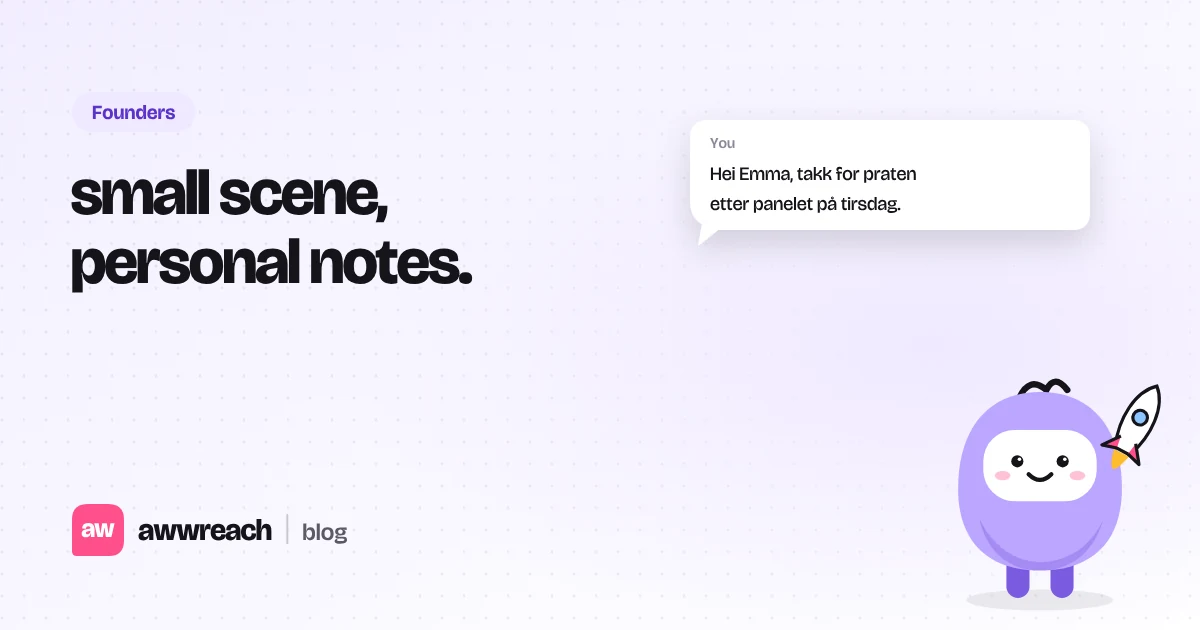
In smaller startup communities, everyone knows everyone. Mention the event where you met, write in the language they post in, and go slower. Our Oslo founders guide is a worked example.
Frequently asked questions
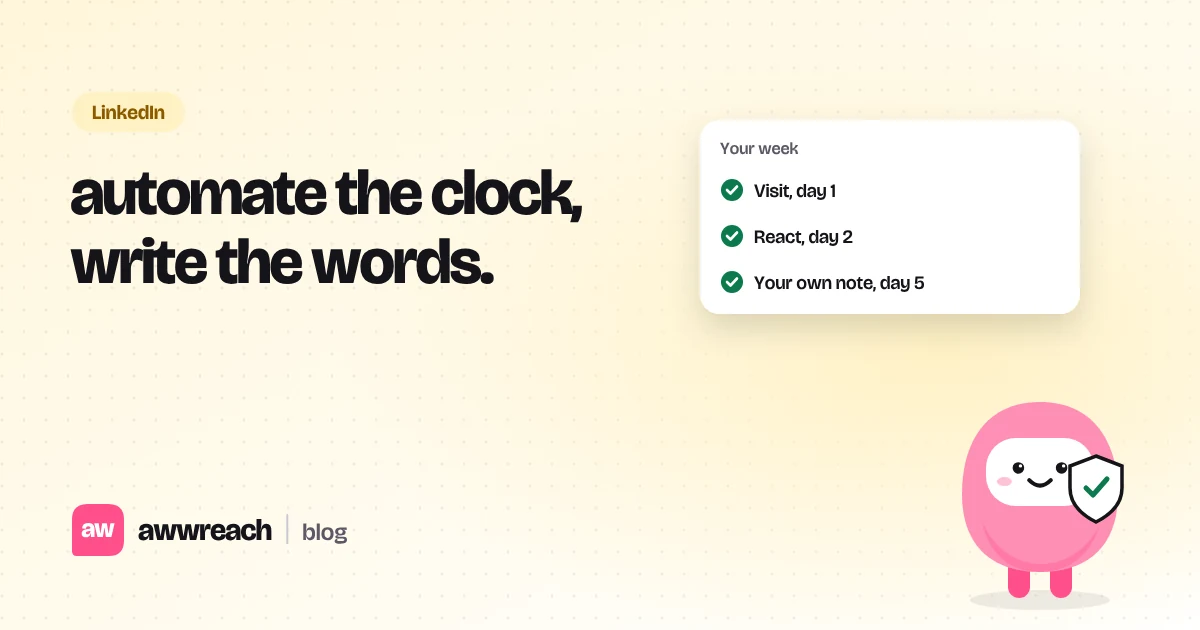
Automate the waiting and the order of steps. Write the comment and the note yourself from something they actually said. LinkedIn's terms prohibit automation, so keep volume low.