How to message a VC on LinkedIn
How founders can message a venture capitalist on LinkedIn: pick the right partner, write a three-part note with real traction, and know what to skip.
The short answer
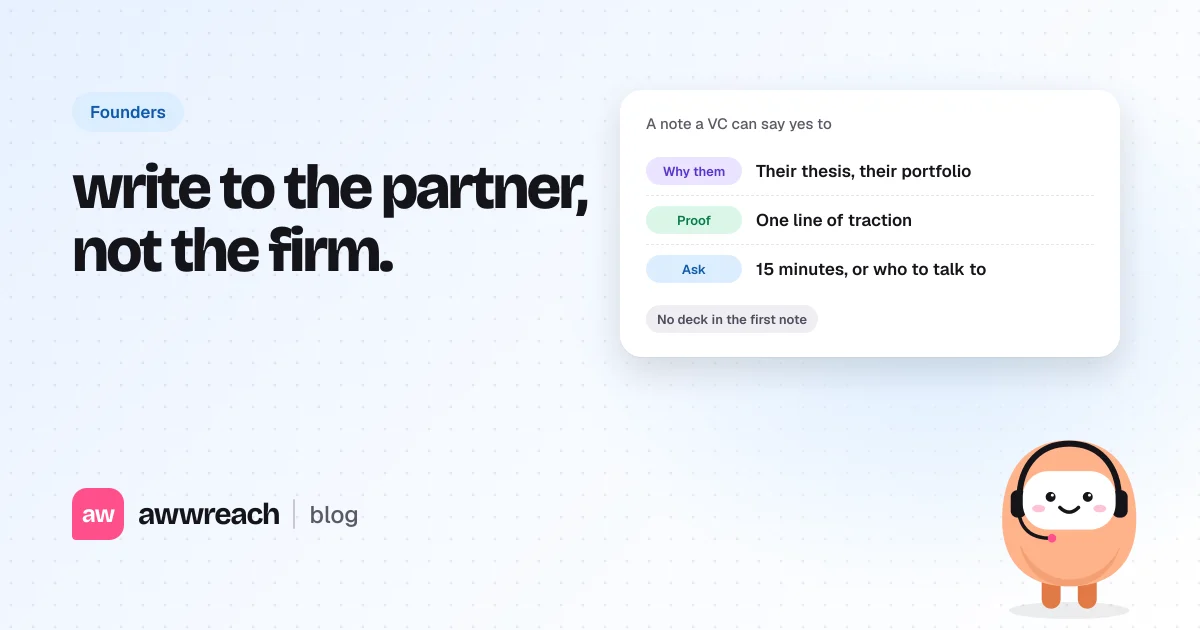
Message the partner who invests at your stage and in your space, not the firm's generic inbox. In under 300 characters, say why them (their thesis, a post or a portfolio company), give one real proof point such as revenue or growth, and ask for 15 minutes or a pointer to the right person. Don't attach a deck to the first note. Warm them up first and follow up once with a new number.
On this page
#Is it okay to message a VC on LinkedIn?
Yes. Many investors are active on LinkedIn and some say publicly that they read their messages. A warm introduction from a founder they've backed is still the strongest route, but a short, specific note to the right partner gets read, especially when they've already seen your name.
#Which investor should you message?
- Match the stage
A fund that leads Series B won't write your first cheque. Check the stage of their recent deals, not their website copy.
- Match the space
Read the partner's posts and their portfolio. Someone who has backed two companies like yours understands the problem already.
- Pick the person
Message the partner or principal who covers your space. Associates can be a good route too, especially at larger funds.
- Check for a shared connection
If a founder they backed knows you, ask for an introduction instead. It's worth the wait.
#What should the message say?
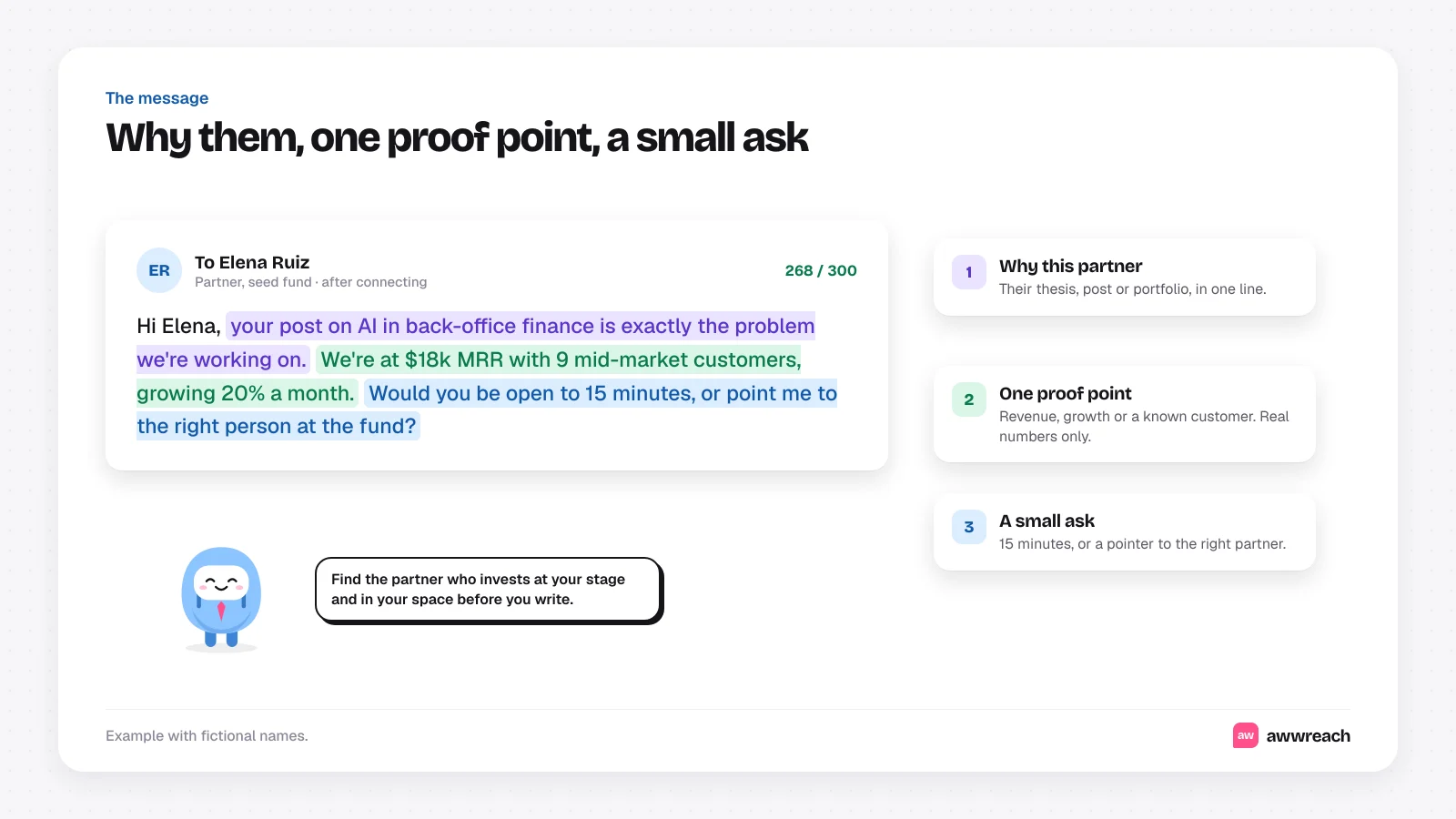
These are examples, not real messages. Use your real numbers, or leave them out.
Hi Elena, your post on AI in back-office finance is exactly the problem we're working on. We're at $18k MRR with 9 mid-market customers, growing 20% a month. Would you be open to 15 minutes, or point me to the right person at the fund?
Hi Raj, you backed two vertical SaaS companies in logistics, so you'll know this problem well. We help freight brokers price loads in seconds and have 4 paying pilots. Could I send you a two-line summary?
#What should you leave out?
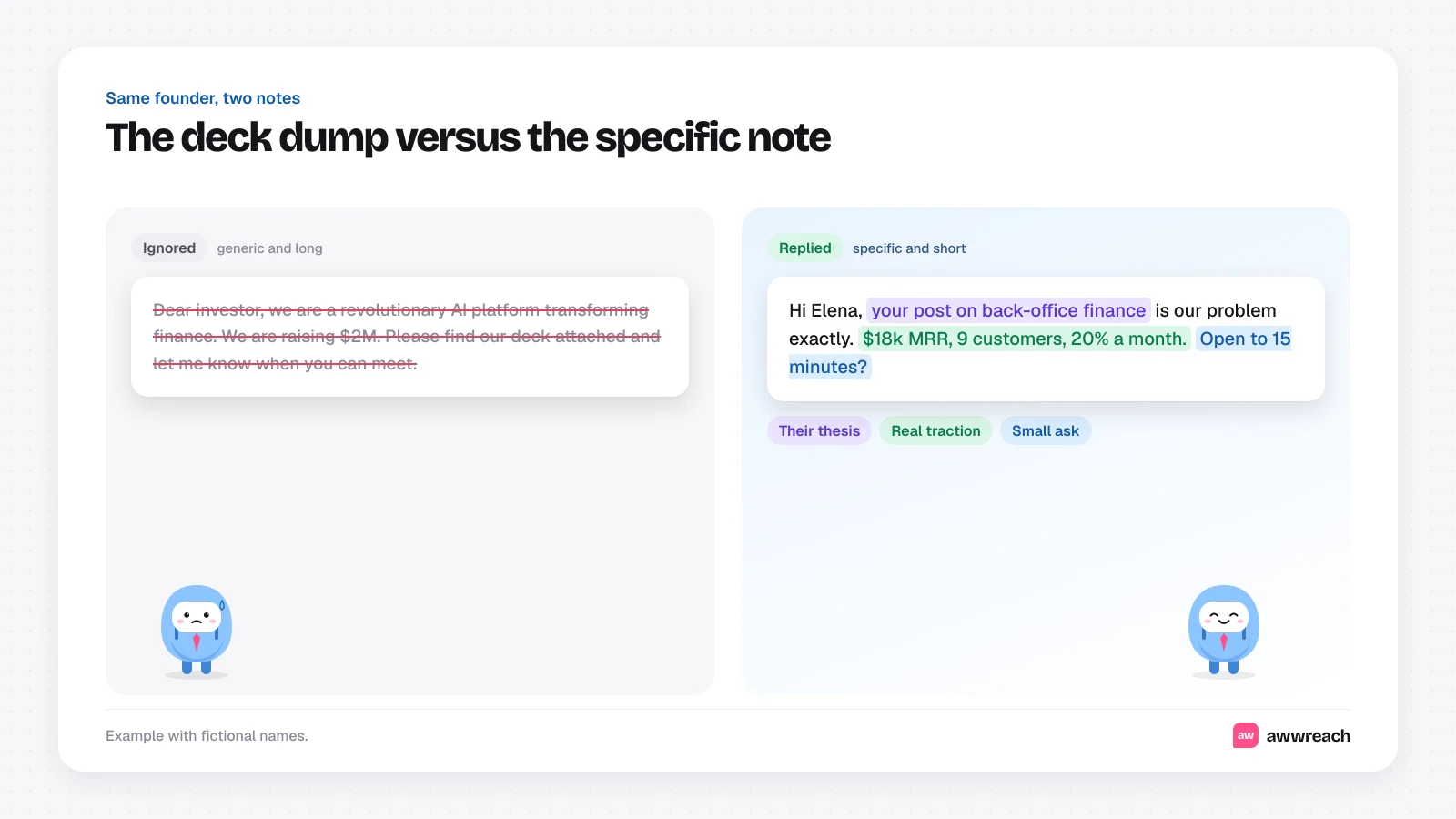
- A deck attachment. Offer it once they're interested.
- Hype words that promise a revolution. Numbers carry more weight.
- The round size in the first line. Lead with why them and what's working.
- Messaging every partner at the same fund. Pick one and wait.
#How do you warm up an investor first?
Follow the partner, react to a post or two over a couple of weeks, and leave one useful comment from a founder's point of view. When your note arrives, they've seen your name and your thinking. The full sequence is in how founders can warm up investors on LinkedIn.
awwreach's Investor warm-up playbook runs that sequence for a list of partners: visits, follows, reactions and one comment over two weeks, then a short connection note and a message written for each investor. You stay in control of who's on the list and what it says about you.
#When should you follow up?
Once, after a week or two, and only with something new: a fresh revenue number, a new customer or a product launch. "Bumping this" adds nothing. "We just signed our 10th customer" does.
#One partner, one number, one ask
Investors get many messages and answer the ones that are clearly for them. Pick the right partner, show why, share one real number and ask for something small. Then keep building, because the best follow-up is progress.
Frequently asked questions
Pick the partner who invests at your stage and in your space, then send a short note: why them, one real proof point and a small ask such as 15 minutes.