How to find your first customers on LinkedIn
A founder's playbook for finding first customers on LinkedIn: the three signals that someone might buy now, a weekly outreach routine and what to say.
The short answer
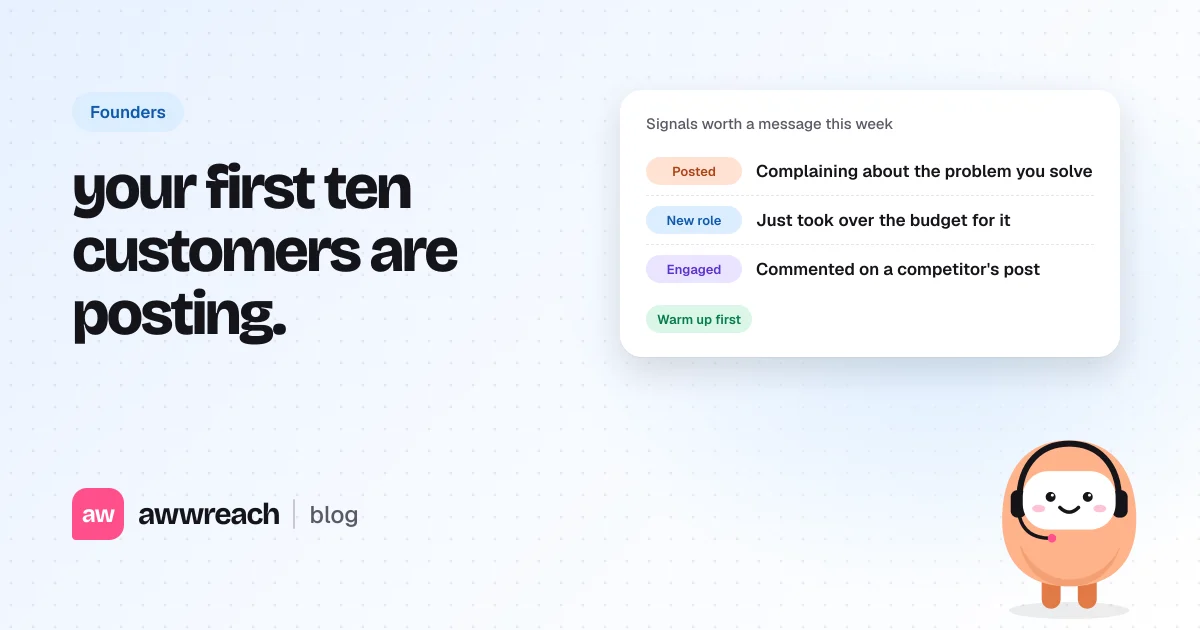
Look for three signals: people posting about the problem you solve, people who just took over the budget for it, and people engaging with posts about your category. Build a list of about 30 a week, warm each one up with a visit, follow and reaction, connect with a note that mentions what they said, and ask for 20 minutes to learn how they handle the problem today. Customers come out of those conversations.
On this page
#Where are your first customers on LinkedIn?
They're the people already talking about the problem. Before product-market fit, you don't need a big list of companies that look right on paper. You need a short list of people who feel the pain now and will tell you how they cope with it.
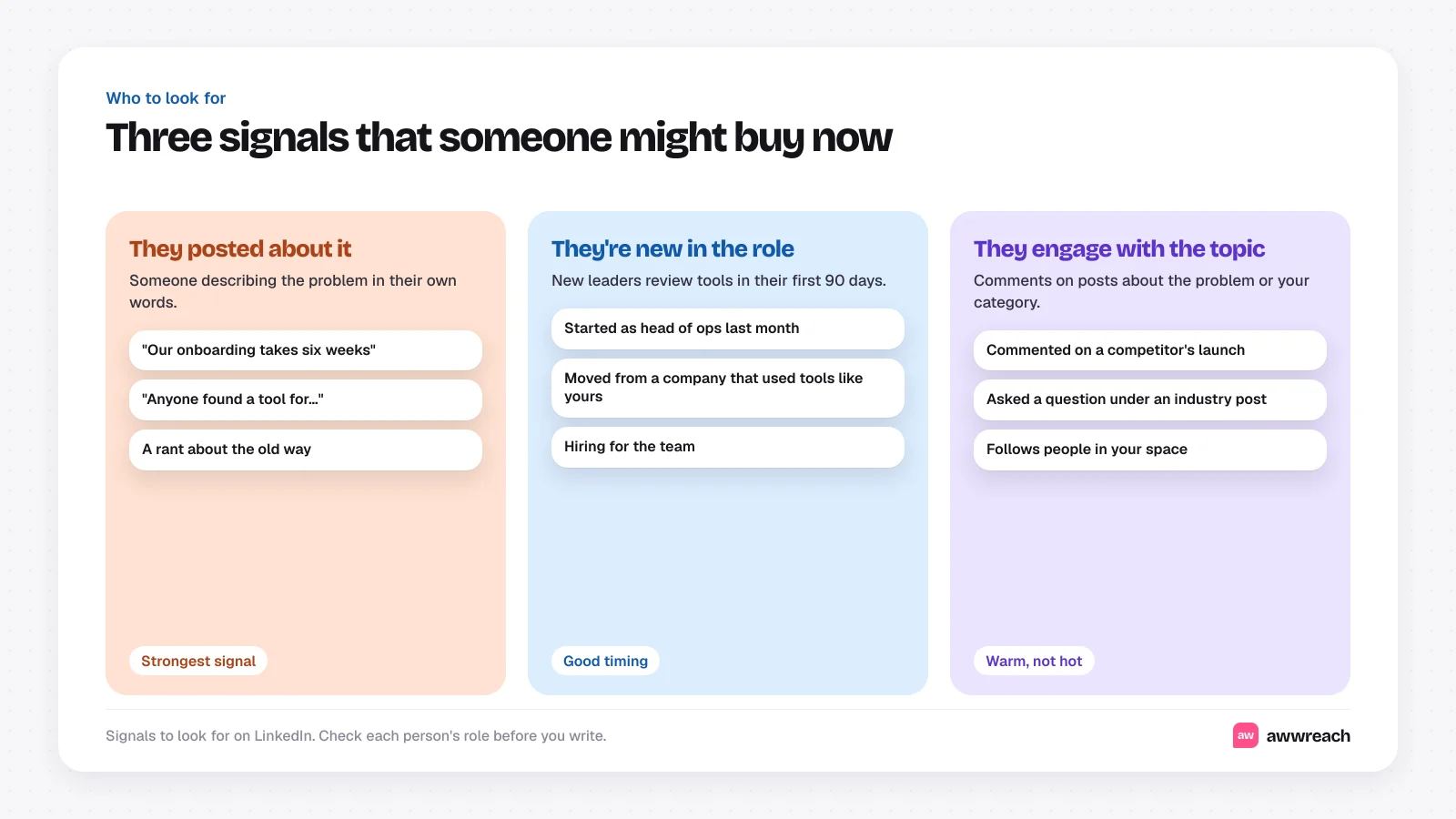
#How do you find people who posted about the problem?
- Search posts for the problem's words
Use the phrases your customers would use, not your category name. "Onboarding takes weeks" finds more buyers than "onboarding software".
- Filter to recent posts
Sort by latest. A post from this week means the problem is live now.
- Read the comments too
Commenters who agree or add their own story are often a better fit than the author.
- Check the role
Keep people who own the problem or the budget. Skip consultants, vendors and recruiters.
awwreach's Latest signal does this every day: give it a topic and it reads up to 100 posts from the last 24 hours that mention it, then adds the authors who fit what you're looking for, each with a fit score you can review.
#What does a founder's outreach week look like?
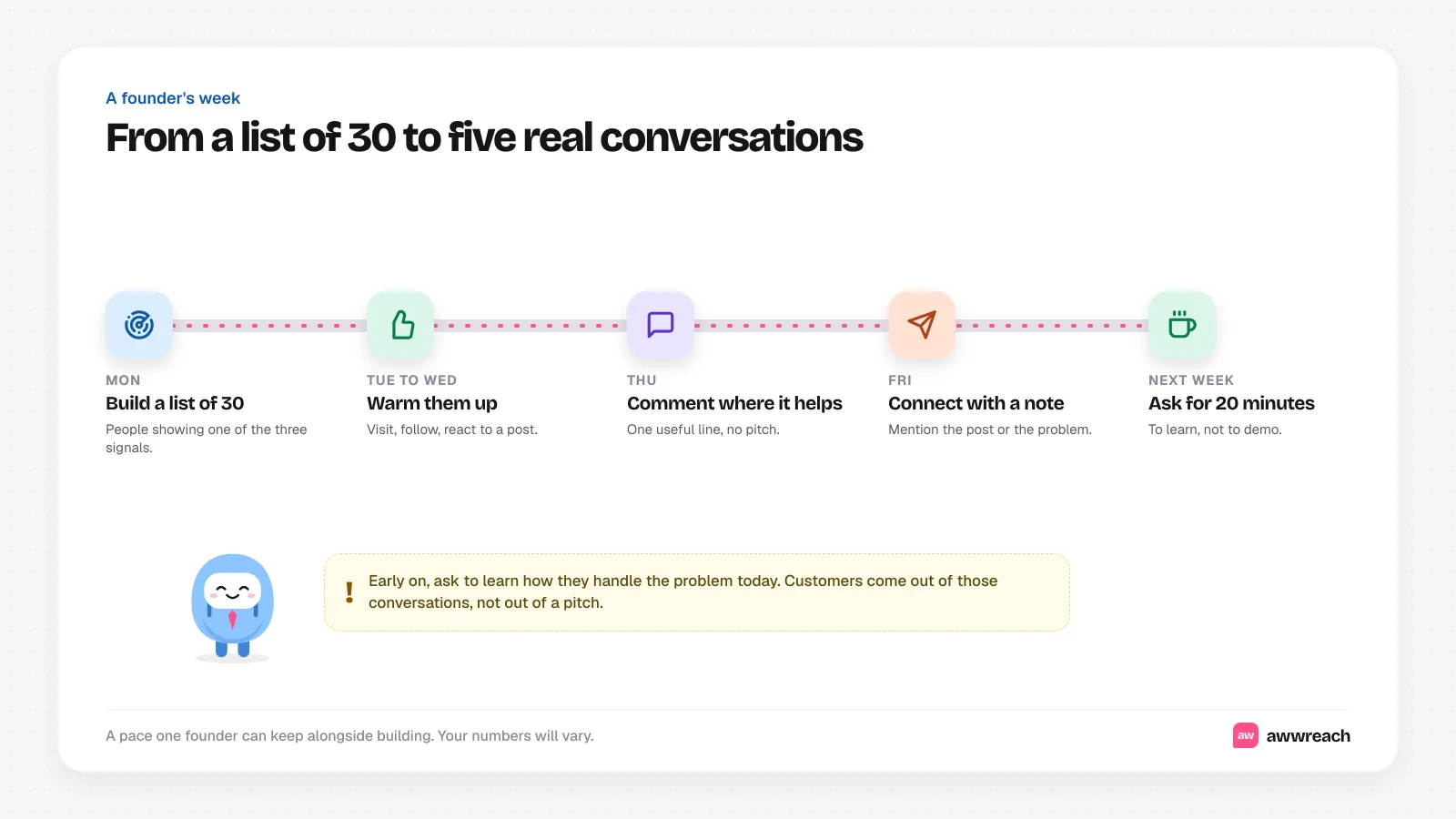
Spacing the touches matters. By the time your connection request arrives, they've seen your name in their notifications and under their post. A note that mentions what they wrote reads like a reply, not a pitch.
#What should you say?
Reference the signal, show you understand the problem, and ask to learn. These are examples, not real messages.
Hi Sam, your post about onboarding new clients taking six weeks hit home. I'm building something in that space and talking to ops leads about how they handle it today. Would you be up for 20 minutes? Happy to share what I'm hearing from others.
Hi Maya, congrats on the new role at Loop. I'm talking to new heads of operations about the first tools they review. Could I ask how you're approaching it, in 15 minutes some time this month?
#When do you pitch?
When they describe a problem you solve and ask what you're building. Until then, keep learning. If someone says "I'd pay for that", ask them to be a design partner and agree a small first project with a clear outcome.
Investors ask about these early customers too. For that side of the raise, see how to message a VC on LinkedIn and how founders can warm up investors on LinkedIn.
#Thirty conversations beat three hundred cold messages
Your first customers are posting about the problem, starting new jobs and commenting under your competitors' launches. Find 30 of them a week, warm them up, and ask to learn. The product, the pitch and the first deals come out of what they tell you.
Frequently asked questions
Search recent posts for the words your customers use to describe the problem, check who wrote and commented on them, and reach the ones who own the problem or the budget.